Quotessence
Home / Quotes / Quote by Mikhail Naimy

Quote by Mikhail Naimy

“Because of their lust for authority men are in constant turmoil. Those in authority are ever fighting to maintain it. Those out of authority are ever struggling to snatch it from the hands of those who hold it. While Man, the God in swaddling-bands, is trampled under foot and hoof and left on the field of battle unnoticed, unattended and unsolved. So furious is the fight, and so blood crazed the fighters that none, alas, would stop to lift the painted mask off the face of the spurious bride and expose her monstrous ugliness to all. Believe, O monks, that no authority is worth the flutter of an eyelash, except the authority of Holy Understanding which is priceless. For that no sacrifice is great. Attain it once, and you shall hold it to the end of Time. And it shall charge your words with more power than all the armies of the world can ever command; and it shall bless your deeds with more beneficence than all the world authorities combined can ever dream of bringing to the world.”

Quote by Mikhail Naimy

Work

The Book of Mirdad: The strange story of a monastery which was once called The Ark

This book delves into the mysterious and otherworldly occurrences surrounding a monastery that was once referred to as The Ark, offering a blend of spiritual intrigue and historical narrative. more

Author
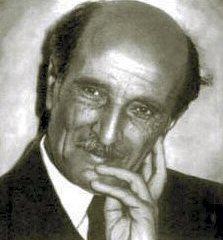
Mikhail Naimy
Mikhail Naimy

Mikhail Naimy, born on October 17, 1889, and died on February 28, 1988, was a prominent Russian and Ukrainian author, poet, and translator of the 20th century. Known for his unique literary style and significant influence on Russian literature, his works are celebrated for their profound emotion and distinctive style. more

You May Also Like

“Cathy smiled back ‘Rules were meant to be broken.’ ‘Don’t disagree,’ Oversteegen replied immediately. ‘Indeed they are. Providin’, however, that the one breakin’ the rules is willin’ t’ pay the price for it, and the price gets charged in full. Which you were, Lady Catharine. I saluted you for it then–at the family dinner table that night, in fact. My mother was infinitely more indisposed thereafter; tottered back t’ her bed cursin’ me for an ingrate. My father was none too pleased either. I salute you for it, again. Otherwise, breakin’ rules becomes the province of brats instead of heroes. Fastest way I can think t’ turn serious political affairs int’ a playpen. A civilized society needs a conscience, and conscience can’t be developed without martyrs—real ones—against which a nation can measure its crimes and sins.”

“All social orders command their members to imbibe in pipe dreams of posterity, the mirage of immortality, to keep them ahead of the extinction that would ensue in a few generations if the species did not replenish itself. This is the implicit, and most pestiferous, rationale for propagation: to become fully integrated into a society, one must offer it fresh blood. Naturally, the average set of parents does not conceive of their conception as a sacrificial act. These are civilized human beings we are talking about, and thus they are quite able to fill their heads with a panoply of less barbaric rationales for reproduction, among them being the consolidation of a spousal relationship; the expectation of new and enjoyable experiences in the parental role; the hope that one will pass the test as a mother or father; the pleasing of one’s own parents, not to forget their parents and possibly a great-grandparent still loitering about; the serenity of taking one’s place in the seemingly deathless lineage of a familial enterprise; the creation of individuals who will care for their paternal and maternal selves in their dotage; the quelling of a sense of guilt or selfishness for not having done their duty as human beings; and the squelching of that faint pathos that is associated with the childless. Such are some of the overpowering pressures upon those who would fertilize the future. These pressures build up in people throughout their lifetimes and must be released, just as everyone must evacuate their bowels or fall victim to a fecal impaction. And who, if they could help it, would suffer a building, painful fecal impaction? So we make bowel movements to relieve this pressure. Quite a few people make gardens because they cannot stand the pressure of not making a garden. Others commit murder because they cannot stand the pressure building up to kill someone, either a person known to them or a total stranger. Everything is like that. Our whole lives consist of metaphorical as well as actual bowel movements, one after the other. Releasing these pressures can have greater or lesser consequences in the scheme of our lives. But they are all pressures, all bowel movements of some kind. At a certain age, children are praised for making a bowel movement in the approved manner. Later on, the praise of others dies down for this achievement and our bowel movements become our own business, although we may continue to praise ourselves for them. But overpowering pressures go on governing our lives, and the release of these essentially bowel-movement pressures may once again come up for praise, congratulations, and huzzahs of all kinds.”

“Compare King William with the philosopher Haeckel. The king is one of the anointed by the most high, as they claim—one upon whose head has been poured the divine petroleum of authority. Compare this king with Haeckel, who towers an intellectual colossus above the crowned mediocrity. Compare George Eliot with Queen Victoria. The Queen is clothed in garments given her by blind fortune and unreasoning chance, while George Eliot wears robes of glory woven in the loom of her own genius. The world is beginning to pay homage to intellect, to genius, to heart. We have advanced. We have reaped the benefit of every sublime and heroic self-sacrifice, of every divine and brave act; and we should endeavor to hand the torch to the next generation, having added a little to the intensity and glory of the flame.”