Quotessence
Home / Quotes / Quote by Wolfgang Pauli

Quote by Wolfgang Pauli

“The theoretical determination of the fine structure constant is certainly the most important of the unsolved problems of modern physics. We believe that any regression to the ideas of classical physics (as, for instance, to the use of the classical field concept)cannot bring us nearer to this goal. To reach it, we shall, presumably, have to pay with further revolutionary changes of the fundamental concepts of physics with a still farther digression from the concepts of the classical theories.”

Quote by Wolfgang Pauli

Work

Writings on Physics and Philosophy

This book compiles various essays that delve into the profound connections between the scientific discipline of physics and the philosophical inquiry into the nature of reality, existence, and knowledge. more

Author
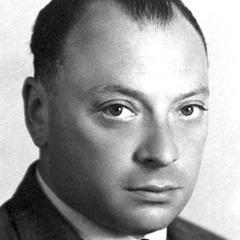
Wolfgang Pauli
Wolfgang Pauli

Wolfgang Pauli was a distinguished physicist born on April 25, 1900, and died on December 15, 1958. He is recognized for his substantial contributions to quantum mechanics, especially for the formulation of the Pauli exclusion principle. Pauli was awarded the Nobel Prize in Physics in 1945 for his work on the explanation of the fine structure of atomic spectra. more

You May Also Like

“Sommerfeld's fine-structure theory was generally considered to be excellently and unambiguously confirmed by experiment. Because the theory rested on the foundation provided by Bohr, the experiments were also taken as strong support for his theory of atomic structure.”

“Following the path of earlier unificationists, one of Eddington's aims was to reduce the contingencies in the description of nature, for example, by explaining the fundamental constants of physics rather than accepting them as merely experimental data. One of these constants was the fine-structure constant ..., which entered prominently in Dirac's theory and was known to be about 1/137.”

“I introduce the subject of fine structure with a mini-calendar of events. ... Winter 1914-15. Sommerfeld computes relativistic orbits for hydrogen-like atoms. Pashcen, aware of these studies, carefully investigates fine structures, .... January 6, 1916. Sommerfeld announces his fine structure formula, citing results to be published by Paschen in support of his answer. February 1916. Einstein to Sommerfeld: "A revelation!" March 1916. Bohr to Sommerfeld: "I do not believe ever to have read anything with more joy than your beautiful work." September 1916. Paschen publishes his work, acknowledging Sommerfeld's "indefatigable efforts.”

“The bridge between the electron and the other elementary particles is provided by the fine structure constant, a ~ 1/137, as manifested in the factor-of-137 spacings between the classical electron radius, electron Compton radius, and Bohr orbit radius. ... An a-quantized mass-generation grid extends accurately from the electron all the way to the top quark t, and leads to a corresponding a-quantized particle lifetime grid.”

“As Sommerfeld said in his famous text "Spectral Lines and Atomic Constitution," on which a generation of physicists learned the subject, "In the fine structure constant e is the representative of the electron theory, h the appropriate representative of the quantum theory, c comes from relativity and characterizes it in contrast to classical theory.”

“In the context of physics, 137 is equal to the integer part of the inverse of the fine structure constant ... The fine structure constant α is the key to the physicist’s quest for a Grand Unified Theory ... The number 137 has intrigued numerous prominent theoretical physicists ... All told, we believe that it is much easier, and more motivating, to remember a number that has deep significance in numerous disciplines, ... with the following terse ode to 137: Bethe was mischievous with 137 Bohr was intrigued by 137 Born was mystified by 137 Fermi was frisky with 137 Feynman was mesmerized by 137 Heisenberg was fascinated by 137 Lederman was enchanted by 137 Pauli was consumed by 137 Turing was matched by 137”