“There is no method of reasoning more common, and yet none more blameable, than, in philosophical disputes, to endeavour the refutation of any hypothesis, by a pretence of its dangerous consequences to religion and morality. When any opinion leads to absurdities, it is certainly false; but it is not certain that an opinion is false, because it is of danger-ous consequence. Such topics, therefore, ought entirely to be forborne; as serving nothing to the discovery of truth, but only to make the person of an antagonist odious.”
Quote by David Hume
Work
An Enquiry Concerning Human Understanding
This book delves into the fundamental questions of human perception, reason, and the limits of human understanding, offering a comprehensive examination of the nature of knowledge and its acquisition. more
Author
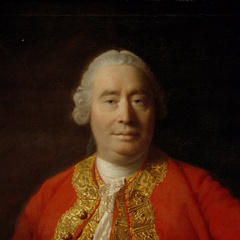
David Hume
David Hume, born on May 7, 1711, in Edinburgh, Scotland, and died on August 25, 1776, was an outstanding philosopher, historian, and economist. Known for his contributions to empiricism and skepticism, his works have had a profound impact on subsequent philosophy, economics, and psychology. more
You May Also Like
Source: The Oedipus Cycle: Oedipus Rex, Oedipus at Colonus, Antigone
“You know, Junpei, everything in the world has its reasons for doing what it does.”
Source: Blind Willow, Sleeping Woman
“The reason that everyone has their own problem is everyone sees something in different side.”
Source: Cinnamon Rain
Source: What's So Great About Christianity
“God is The Reasonable One, therefore reason & faith are not antithetical" ~R. Alan Woods [2007]”