“I no longer even need a window to follow the journey. I can narrate it to myself hour by hour, live it from memory, all of it - canyons, towns, the reflection of the clouds in the rivers. Memory has taken on wings and speed has become an inner quality. A pity. No doubt it was better that this purely fornicatory and imaginary relationship, with her sexual voracity and her ankle bracelets, which we carried on all over the place - in the Badlands, in the Chelsea Hotel, in motels, in the sand, between the sheets - and which always meant immediate lovemaking in the minutes that followed, never satisfied, but just as sweet, and flexible and blonde, her eyes raised like a slavegirl's and her hand outstretched towards her sex, she free and servile, feminine and muscled, laughing and admiring, animal blood and metallic eyes - it was natural that this relationship should finish with a pathetic fellatio on a motel balcony, in the morning mist and a hypothetical child which no doubt was not mine and which I shall never see. I have even forgotten her name, but I have not forgotten the straw scent of her sex, nor the twenty-dollar bet on salt or snow, nor the sudden menstrual nosebleed I had one morning when I saw her arriving at my place in all her Californian splendour.”
Quote by Jean Baudrillard
Book:Cool memories
Work
Cool memories
This book is a compilation of personal anecdotes and memories that evoke a sense of nostalgia for the reader, capturing the essence of bygone times and the emotions associated with them. more
Author
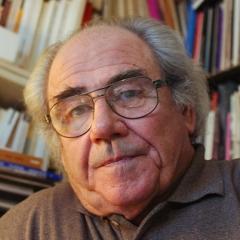
Jean Baudrillard
Jean Baudrillard was a French philosopher known for his critical studies on consumerism, media, and semiotics. His theories have had a profound impact on postmodernism and cultural studies. more
You May Also Like
Source: The Transparency of Evil: Essays in Extreme Phenomena
Source: Enigmatic Evolution
Source: Baby Be Healed From Cancer
“Yes, death is far less dire to contemplate Than a forced marriage to an unloved mate”
Source: The School for Husbands
Source: Steel Crow Saga
“A fraught life may be full or dangerous, it depends on one’s attitude.”
Source: Regarding Willingness