“...he approached these faces— even of those near and dear—as if they were abstract puzzles or tests. He did not relate to them, he did not behold. No face was familiar to him, seen as a ‘thou’, being just identified as a set of features, an ‘it’. Thus, there was formal, but no trace of personal, gnosis. And with this went his indifference, or blindness, to expression. A face, to us, is a person looking out—we see, as it were, the person through his persona, his face.”
Quote by Oliver Sacks
Work
The Man Who Mistook His Wife for a Hat and Other Clinical Tales
Browse quotes and source details for this work. more
Author
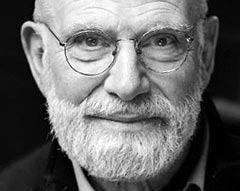
Oliver Sacks
Oliver Sacks was a renowned neurologist known for his profound insights into the human brain and nervous system. His work delved into the relationship between brain diseases and human behavior, revealing the fascinating world of neuroscience to readers. more
You May Also Like
Source: The Man Who Mistook His Wife for a Hat and Other Clinical Tales
Source: The Man Who Mistook His Wife for a Hat and Other Clinical Tales
Source: The Man Who Mistook His Wife for a Hat and Other Clinical Tales
Source: Gratitude
Source: The Man Who Mistook His Wife for a Hat and Other Clinical Tales
“No one's being excludes every possibility.”
Source: Cloud of Sparrows
“All of us are in some sort of theater that we create for ourselves.”
“Terkadang,yang tak bisa kamu lupakan adalah seseorang yang tak pernah bisa kamu miliki.”
Source: All You Can Eat
Source: Geboor: Spiritual Fiction