Quotessence
Home / Quotes / Quote by Rasheed Ogunlaru

Quote by Rasheed Ogunlaru

“Friendships - and indeed most relationships - are measured in the closeness of hearts, minds and soul ties... not in the distance of physical miles or even the passing of time.”

Quote by Rasheed Ogunlaru

Author
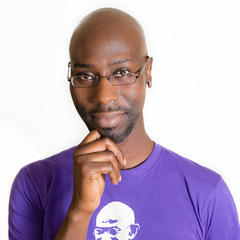
Rasheed Ogunlaru
Rasheed Ogunlaru

Rasheed Ogunlaru is a British author born on June 15, 1970. His work spans various domains including personal development, leadership, and corporate strategy. Ogunlaru is known for his unique perspective and profound insights, inspiring countless readers and audiences with his books and speeches. more

You May Also Like

“But struggling with these better feelings was pride,--the vice of the lowest and most debased creatures no less than of the high and self-assured. The miserable companion of thieves and ruffians, the fallen outcast of low haunts, the associate of the scourings of the jails and hulks, living within the shadow of the gallows itself,--even this degraded being felt too proud to betray a feeble gleam of the womanly feeling which she thought a weakness, but which alone conneced her with that humanity, of which her wasting life had obliterated so many, many traces when a very child.”

“Acknowledging that a woman's right to be safe from a gender-based attack was a "civil right," I believed, was critically important in changing the American consciousness. When a right reaches the status and categorization of a "civil right," it means the nation has arrived at a consensus that is nonnegotiable. Violence against women would no longer be written off ... Once our criminal justice system -- at the local, state and federal levels -- recognized these as serious and inexcusable crimes, women could stop blaming themselves.”

“Such a number of nights,' said the girl, with a touch of woman's tenderness, which communicated something like sweetness of tone, even to her voice; 'such a number of nights as I've been patient with you, nursing and caring for you, as if you had been a child: and this the first that I've seen you like yourself; you wouldn't have served me as you did just now, if you'd thought of that, would you? Come, come; say you wouldn't.”

“The photograph, then, becomes a representation of a representation of a disease that represents. In other words, in order to produce the most perfect images of hysteria, the hysteric – a woman whose illness simulates the symptoms of other diseases – was transformed, through hypnosis, into an artificial hysteric who perfectly simulated the simulations of hysteria. The medical photograph becomes a copy of a copy of a copy, a representation so far removed from the original that all duplicitous traits, were easily erased, leaving the deranged and chaotic nature of the original far behind. The photograph succeeded in turning the hysteric into a wholly artificial being, literally a flat, framed, unmoving image.”