“She looked away. You make it like it was the coin. But you're the one. It could have gone either way. The coin didnt have no say. It was just you. Perhaps. But look at it my way. I got here the same way the coin did. She sat sobbing softly. She didnt answer. For things at a common destination there is a common path. Not always easy to see. But there. Everthing I ever thought has turned out different, she said. There aint the least part of my life I could of guessed. Not this, not none of it. I know. You wouldnt of let me off noway. I had no say in the matter. Every moment in your life is a turning and every one a choosing. Somewhere you made a choice. All followed to this. The accounting is scrupulous. The shape is drawn. No line can be erased. I had no belief in your ability to move a coin to your bidding. How could you? A person's path through the world seldom changes and even more seldom will it change abruptly. And the shape of your path was visible from the beginning.”
Quote by Cormac McCarthy
Work
No Country for Old Men
Cormac McCarthy's novel is a haunting exploration of fate, conscience, and the moral decay of a society. The story follows a man who stumbles upon a large sum of money and becomes entangled in a dangerous chase across the desert. As the line between good and evil blurs, the protagonist is forced to confront the harsh realities of a world where the old ways no longer apply. more
Author
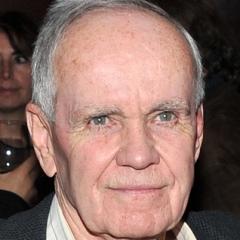
Cormac McCarthy
American novelist known for his profound literary style and rich imagination. His notable works include 'The Border Trilogy' and 'No Country for Old Men'. more
You May Also Like
Source: The Astrology of Fate
Source: Where the Dark Stands Still
Source: The Girl in Question
Source: Mahabharata
Source: Late Call
Source: Where the World Ends
Source: Gold Boy, Emerald Girl
Source: The Crane Husband
“Words are God’s gift to mend a broken soul.”
Source: Muses of Wandering Passions