Quotessence
Home / Quotes / Quote by John Keats

Quote by John Keats

“I think poetry should surprise by a fine excess, and not by singularity; it should strike the reader as a wording of his own highest thoughts, and appear almost a remembrance.”

Quote by John Keats

Work

Letters of John Keats

Browse quotes and source details for this work. more

Author
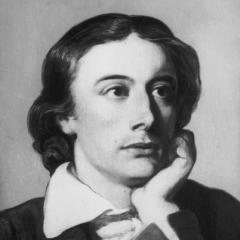
John Keats
John Keats

John Keats, a British Romantic poet, was born on October 31, 1795, and died on February 23, 1821. Known for his profound depictions of nature, love, and death, Keats' poetry is characterized by its fresh style and sincere emotion, exerting a profound influence on poets of later generations. more

You May Also Like

“Perhaps the Ci-ty dreamed of an-other, en-emy city, float-ing across the sea to invade the es-tuary . . . or of waves of darkness . . . waves of fire . . . Perhaps of being swallowed again, by the immense, the si-lent Mother Con-tinent? It's none of my business, city dreams. . . . But what if the Ci-ty were a growing neo-plasm, across the centuries, always chang-ing to meet exactly the chang-ing shape of its very worst, se-cret fears?”

“Yea, she hath passed hereby, and blessed the sheaves, And the great garths, and stacks, and quiet farms, And all the tawny, and the crimson leaves. Yea, she hath passed with poppies in her arms, Under the star of dusk, through stealing mist, And blessed the earth, and gone, while no man wist. With slow, reluctant feet, and weary eyes, And eye-lids heavy with the coming sleep, With small breasts lifted up in stress of sighs, She passed, as shadows pass, among the sheep; While the earth dreamed, and only I was ware Of that faint fragrance blown from her soft hair. The land lay steeped in peace of silent dreams; There was no sound amid the sacred boughs. Nor any mournful music in her streams: Only I saw the shadow on her brows, Only I knew her for the yearly slain, And wept, and weep until she come again.”

“I have started to see poetry in the strangest of things: from the roughest nub of nutmeg to the pale parsnip seamed with soil. And this has made me wonder if I can write a cookery book that includes the truth and beauty of poetry. Why should the culinary arts not include poetry? Why should a recipe book not be a thing of beauty? My thoughts come quickly and smoothly in the solitude of the kitchen, and as I beat the eggs I find myself comparing the process of following a recipe to that of writing a poem. Fruit, herbs, spices, eggs, cream: these are my words and I must combine them in such a way they produce something to delight the palate. Exactly as a poem should fall upon the ears of its readers, charming or moving them. I must coax the flavors from my ingredients, as a poet coaxes mood and meaning from his words.”