Quotessence
Home / Quotes / Quote by Kabir Helminski

Quote by Kabir Helminski

Work

In the House of Remembering: The Living Tradition of Sufi Teaching

Browse quotes and source details for this work. more

Author
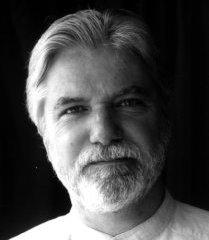
Kabir Helminski
Kabir Helminski

Kabir Helminski is a renowned author born in 1947. His works primarily focus on spirituality, philosophy, and mysticism, which have won him a wide readership. more

You May Also Like

“Remembrance in its most elementary, tangible form is to chant the names of God. Remembrance is everything. Our destination as spiritually developing human beings is to live our lives in such a way that we are completely within that continual remembrance. That is the world and universe we live in. It surrounds and informs us. It illuminates our perception and softens our hearts. It should also bring us joy and happiness. That is our reality, because looking at life through the distorting eyes of the ego is, at best, a secondhand reality. The word for „remembrance“ in Arabic literally means „to mention,“ yet we translate it as „remembrance.“ When you mention someone, in a way, you‘re remembering the one you are calling to mind. We are remembering our Origin, remembering that we come from God and to God we will return. People sometimes talk about how children have an open channel to the Divine because they just came from God relatively recently. Remembering our Origin is a fundamental truth that we need to call to mind. This is expressed in the hadith „Whoever belongs to God, God will belong to him or her.“ In that sense, if remembrance is deep enough, complete enough, it is the Divine remembering in you. In the state of belonging to God, what you want is not different than what the Divine wants. And „God“ wants what you want; there is then no separate „you“ wanting. There is no duality or personal will pulling in the opposite direction. Rumi calls that being under „the compulsion of love.“(p. 6)”

“The messenger of God, peace be upon him, said, „If anyone travels a path in search of knowledge, God will conduct him through one of the paths of paradise. The angels will lower their wings, delighted with the one who seeks knowledge. And the inhabitants of the heavens and the earth, and the fish in the depths of the water will seek forgiveness for him. The higher station of the gnostic over the worshipper is like the position of the full moon among the stars.“ The hadith is not talking about the sect of Gnostics, but rather the knowers of God. The knowers of God are the heirs of the Prophet. (p. 90)”

“The word for paradise is actually „garden“ or jannah in Arabic. Paradise is not just something that comes after this earthly life. The Qur‘an says, The Garden will be brought near to all those who are in a state of Godconsciousness (Surah ash-Shu‘ara 26:90). To all those who deepen in their remembrance, deepen in presence, The Garden will be brought near. (p. 101)”

“To invite God into a conversation is to open the door of mystery and possibility. It is not about an exchange between two people, with the thought of „I‘ll do this for you, maybe someday you‘ll do it for me.“ It has nothing to do with expectation. It‘s not a quid pro quo. It‘s something entirely of a different order and unpredictable. (p. 3)”

“On the spiritual path we choose to give a certain amount of time and effort to be in the company of the Divine consciously and intentionally. It‘s appropriate to have, as we have in our Tradition, times of the day dedicated to this. There are times when we make an effort to bring ourselves into the presence of God. In our Tradition there is a physical effort involved in worship – the postures of bowing and prostration during salaat, or the practice of turning. It‘s „doing,“ not just a „being“ in Sufi spiritual practice. It‘s „doing“ with „being.“ The physical efforts in the ritual prayer also are done in time. We undertake the ritual prayers at the times indicated, following what we believe to be a heavenly, ordained pattern, not merely at our convenience, not just when we want to. (p. 3)”

“Don‘t put it off, don‘t wait too long. When we truly commit ourselves to a spiritual path and practice, something in Reality rises up to support us. The destiny of what we‘re designed to be becomes real, and the fate of unconscious behaviors is avoided. Or, even if not avoided, our mistakes become learning experiences, blessed by some invisible Mercy. As Yunus Emre said, „Ever since the glance of the mature fell upon me, nothing has been a misfortune.“ (p. 5)”