Quotessence
Home / Quotes / Quote by Michel de Montaigne

Quote by Michel de Montaigne

Author

Michel de Montaigne
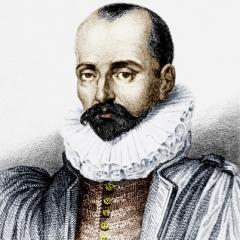
Michel de Montaigne

Michel de Montaigne was a French Renaissance philosopher, essayist, and writer. He is considered one of the most significant figures in the history of the essay. Montaigne's work, particularly his book 'Essays', has been influential in the development of modern prose. more

You May Also Like

“Solitude is dangerous to reason, without being favourable to virtue: pleasures of some sort are necessary to the intellectual as to the corporeal health; and those who resist gaiety, will be likely for the most part to fall a sacrifice to appetite; for the solicitations of sense are always at hand, and a dram to a vacant and solitary person is a speedy and seducing relief. Remember that the solitary mind is certainly luxurious, probably superstitious, and possibly mad: the mind stagnates for want of employment, grows morbid, and is extinguished like a candle in foul air.”

“Wives, children, and goods must be had, and especially health, by him that can get it; but we are not so to set our hearts upon them that our happiness must have its dependence upon them; we must reserve a backshop, wholly our own and entirely free, wherein to settle our true liberty, our principal solitude and retreat. And in this we must for the most part entertain ourselves with ourselves, and so privately that no exotic knowledge or communication be admitted there; there to laugh and to talk, as if without wife, children, goods, train, or attendance, to the end that when it shall so fall out that we must lose any or all of these, it may be no new thing to be without them. We have a mind pliable in itself, that will be company; that has wherewithal to attack and to defend, to receive and to give: let us not then fear in this solitude to languish under an uncomfortable vacuity.”

“Tant que mes jambes me permettent de fuir, tant que mes bras me permettent de combattre, tant que l'expérience que j'ai du monde me permet de savoir ce que je peux craindre ou désirer, nulle crainte : je puis agir. Mais lorsque le monde des hommes me contraint à observer ses lois, lorsque mon désir brise son front contre le monde des interdits, lorsque mes mains et mes jambes se trouvent emprisonnées dans les fers implacables des préjugés et des cultures, alors je frissonne, je gémis et je pleure. Espace, je t'ai perdu et je rentre en moi-même. Je m'enferme au faite de mon clocher où, la tête dans les nuages, je fabrique l'art, la science et la folie.”

“In any love-story there are usually two stages or phases. There is the initial stage, where love is expressed by the giving of gifts, especially the gift of self. Then there comes a time when it is no longer enough to give gifts to the beloved, but one has to be ready to suffer for her or for him. Only then can it be seen whether the love is real. In the story of a vocation to consecrated virginity there are also usually two stages. There is the initial stage of the vocation, when, spurred on by grace and attracted by the ideal, one joyfully and enthusiastically says, "Yes, Lord, here I am!" Then comes the time of solitude of heart, of weariness, of crisis, when, in order to maintain that "Yes," one has to die”

“Pasmo sempre quando acabo qualquer coisa. Pasmo e desolo-me. O meu instinto de perfeição deveria inibir-me de acabar; deveria inibir-me até de dar começo. Mas distraio-me e faço. O que consigo é um produto, em mim, não de uma aplicação de vontade, mas de uma cedência dela. Começo porque não tenho força para pensar; acabo porque não tenho alma para suspender. Este livro é a minha cobardia.”