Quotessence
Home / Quotes / Quote by Plato

Quote by Plato

“O most ingenious Theuth, the parent or inventor of an art is not always the best judge of the utility or inutility of his own inventions to the users of them.”

Quote by Plato

Author
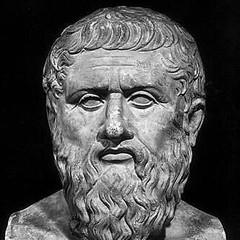
Plato
Plato

Plato (428 BC - 348 BC) was a prominent Greek philosopher, one of the most influential figures in Western philosophy. He founded the Academy, which was the first institution of higher education in the Western world. Plato's philosophy, centered around the theory of Forms, emphasized the importance of reason and morality. more

You May Also Like

“The results of Shaefer's analysis were staggering. In early 2011, 1.5 million households with roughly 3 million children were surviving on cash incomes of no more than $2 per person, per day in any given month. That's about one out of every twenty-five families with children in America. What's more, not only were these figures astoundingly high, but the phenomenon of $2-a-day poverty among households with children had been on the rise since the nation's landmark welfare reform legislation was passed in 1996-and at a distressingly fast pace. As of 2011, the number of families in $2-a-day poverty had more than doubled in just a decade and a half. It further appeared that the experience of living below the $2-a-day threshold didn't discriminate by family type or race. While single-mother families were most at risk of falling into a spell of extreme destitution, more than a third of the households in $2-a-day-poverty were headed by a married couple. And although the rate of growth was highest among African Americans and Hispanics, nearly half of the $2-a-dat poor were white.”

“The results of Shaefer's analysis were staggering. In early 2011, 1.5 million households with roughly 3 million children were surviving on cash incomes of no more than $2 per person, per day in any given month. That's about one out of every twenty-five families with children in America. What's more, not only were these figures astoundingly high, but the phenomenon of $2-a-day poverty among households with children had been on the rise since the nation's landmark welfare reform legislation was passed in 1996-and at a distressingly fast pace. As of 2011, the number of families in $2-a-day poverty had more than doubled in just a decade and a half. It further appeared that the experience of living below the $2-a-day threshold didn't discriminate by family type or race. While single-mother families were most at risk of falling into a spell of extreme destitution, more than a third of the households in $2-a-day-poverty were headed by a married couple. And although the rate of growth was highest among African Americans and Hispanics, nearly half of the $2-a-day poor were white.”

“America’s cash welfare program-the main government program that caught people when they fell-was not merely replaced with the 1996 welfare reform; it was very nearly destroyed. …This book is about what happens when a government safety net that is built on the assumption of full-time, stable employment at a living wage combines with a low-wage labor market that fails to deliver on any of the above. It is this toxic alchemy, we argue, that is spurring the increasing numbers of $2-a-day poor in America.”

“God takes the side of the suffering —those who are suffering in body, mind, heart, spirit, or soul. God not only takes the side of the suffering; God weeps when we bear the brunt of violence, oppression, and poverty brought about by condition, circumstance, or even choice.”

“When a country just emerges from poverty, it possesses cheap labor; it's the best period for everyone, including the poor. This sweet spot occurs only once in a civilization. China was in that position two decades ago, and now it's India and Bangladesh. Enjoy this advantageous position as long as it lasts. The labor costs will soon rise, and we will face the same fate as the West. On paper, these countries may have higher GDP and better HDI, but in reality, people cannot afford basic necessities such as food, housing, healthcare, and education.”