“And yet it bewildered him that people truly believed capitalism to be about making things or providing services at a profit. He found it extraordinary how most people disliked speculators but thought of them as peripheral, as harmless bubbles on a steady stream of enterprise. They fail to recognize the very opposite is true, […] that enterprise long ago became a bubble on a whirlpool of speculation. That, in reality, workers, inventors and managers resemble driftwood buffeted hither and thither on a manic torrent of runaway finance.”
Quote by Yanis Varoufakis
Work
Another Now: Dispatches from an Alternative Present
Browse quotes and source details for this work. more
Author
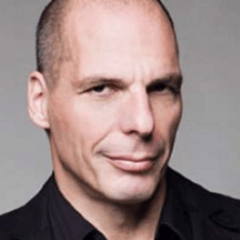
Yanis Varoufakis
Yanis Varoufakis is a Greek economist and politician who served as the Finance Minister of Greece from 2015 to 2015. He is known for his role in the Greek debt crisis and his advocacy for a more democratic economic system. more
You May Also Like
Source: Plays 1: A Doll's House/Emperor and Galilean/John Gabriel Borkman/When We Dead Awaken
Source: The Bubble and Beyond
Source: Building Suburbia: Green Fields and Urban Growth, 1820-2000
Source: Universal Harvester
Source: Building Suburbia: Green Fields and Urban Growth, 1820-2000
“Every action you take is a vote for the type of person you wish to become.”
Source: Paradigm Shift: Change Your Mindset and Live the Life of Your Dreams
Source: Happy City: Transforming Our Lives Through Urban Design
“Buying real estate at a bargain price can only be done thru proper research and due diligence.”