Quotessence
Home / Quotes / Quote by Betty Neels

Quote by Betty Neels

Work

Roses Have Thorns

This narrative delves into the complexities of human relationships, using the metaphor of a rose to illustrate how the most beautiful aspects of life often come with hidden dangers. The plot likely follows characters who navigate a world of passion and deception, where every bloom is accompanied by a sharp sting. The title suggests a tale of romance fraught with obstacles, where the sweetness of affection is tempered by the harsh realities of jealousy, secrets, or loss. Through its evocative imagery, the book examines the duality of love—its capacity to both heal and wound—and the resilience required to embrace its full, thorny nature. more
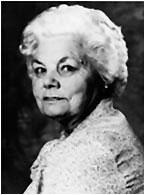
Author

Betty Neels
Betty Neels

Betty Neels was a renowned Dutch writer known for her heartwarming family novels. Her works typically focus on the lives of middle-class families, depicting complex emotional relationships and challenges in everyday life. Her writing style has been well-received by readers, and her books have been popular in many countries. more

You May Also Like

“At the moment I am occupied by an investigation with Kirchhoff which does not allow us to sleep. Kirchhoff has made a totally unexpected discovery, inasmuch as he has found out the cause for the dark lines in the solar spectrum and can produce these lines artificially intensified both in the solar spectrum and in the continuous spectrum of a flame, their position being identical with that of Fraunhofer’s lines. Hence the path is opened for the determination of the chemical composition of the Sun and the fixed stars.”

“Even in rainier areas, where dust is less inexorable and submits to brooms and rags, it is generally detested, because dust is not organized and is therefore considered aesthetically bankrupt. Our light is not kind to faint diffuse spreading things. Our soft comfortable light flatters carefully organized, formally structured things like wedding cakes with their scrolls and overlapping flounces. It takes the mortal storms of a star to transform dust into something incandescent. Our dust, shambling and subtractive as it is, would be radiant, if we were close enough to such a star, to that deep and dangerous light, and we would be ravished by the vision—emerald shreds veined in gold, diamond bursts fraught with deep-red flashes, aqua and violet and icy-green astral manifestations, splintery blinking harbor of light, dust as it can be, the quintessence of dust.”

“When you do the math and examine how much energy is produced per atomic union, you find that fusing anything to iron’s twenty-six protons costs energy. That means post-ferric fusion* does an energy-hungry star no good. Iron is the final peal of a star’s natural life.”

“A hundred years ago, Auguste Comte, … a great philosopher, said that humans will never be able to visit the stars, that we will never know what stars are made out of, that that's the one thing that science will never ever understand, because they're so far away. And then, just a few years later, scientists took starlight, ran it through a prism, looked at the rainbow coming from the starlight, and said: "Hydrogen!" Just a few years after this very rational, very reasonable, very scientific prediction was made, that we'll never know what stars are made of.”