Quotessence
Home / Quotes / Quote by Jeanette Winterson

Quote by Jeanette Winterson

Work

Oranges Are Not the Only Fruit

This novel is a poignant coming-of-age story that delves into the complexities of personal beliefs and family dynamics. The protagonist navigates her own sexuality and the expectations of her religious upbringing, offering a candid look at the challenges faced by young individuals in search of their identity. more

Author
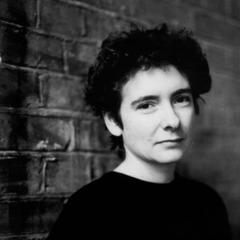
Jeanette Winterson
Jeanette Winterson

Jeanette Winterson is a renowned British author known for her distinctive literary style and profound social commentary. Her works span a wide range of themes, including novels, essays, and poetry. Winterson's novel 'Oranges Are Not the Only Fruit' is a story about growth, faith, and sexuality that has received widespread acclaim. more

You May Also Like

“I have never felt myself to be ageing: on the contrary, I have always had the strange sensation as time passes that I am getting not older but younger. My body feels as though it has innocence as its destination. This is not, of course, a physical reality – I view the proof in the mirror with increasing puzzlement – but it is perhaps a psychological one that conscripts the body into its workings. It is as though I was born imprisoned in a block of stone from which it has been both a necessity and an obligation to free myself. The feeling of incarceration in what was pre-existing and inflexible works well enough, I suppose, as a paradigm for the contemporary woman’s struggle towards personal liberty. She might feel it politically, socially, linguistically, emotionally; I happen to have felt it physically. I am not free yet, by any means. It is laborious and slow, chipping away at that block. There would be a temptation to give up, were the feelings of claustrophobia and confinement less intense.”

“On November 10, 2016, British woman stopped working. Or rather, they stopped being paid what they were worth for their work. Feminist economists had calculated that, as a result of the multiple processes that perpetuate unequal pay between women and men, from November 10 to December 31 that year, British women were working for free.”

“Taking my mother's experiences seriously led to my exploring the militarisation of marriages. It made me alert to what feminist historians have been telling us now for four decades: pay attention to the feminised silences - not just silences due to oppression, but silence flowing from many women's belief that their wartime experiences don't "matter" - that they are merely private, trivial, apolitical. Men wage war; women simply "cope" with wartime. Coping does not make for exciting history.”

“Ultimately, the witch craze was not the result of just one single factor. Rather, it was a conglomeration of influences that worked together over the span of hundreds of years to shape early modern Europe into the ideal environment for a continent-wide witch hunt: misogyny, patriarchy, religious tyranny, scapegoating, land disputes, the rise of capitalism, shifting views about magic, political propaganda, and an established history of persecution and violence.”

“Women suffer an immense burden of impression management concerning everyday behaviours, many of which are the same behaviours required for success. Assertive women risk being seen as 'bossy,' whereas assertive men are considered 'decisive.' Women prepared to have a difficult conversation are 'ball breakers,' whereas men are just expected to 'speak the truth.' Women risk being perceived differently to men for displaying the same behaviours, saying the same things, in the same way, in the same context. Women feel the pressure of considering how they will be perceived to avoid being judged less favourably.”