Quotessence
Home / Quotes / Quote by Walter Russell

Quote by Walter Russell

“Successful men of all ages have learned to multiply themselves by gathering thought-energy into a high potential and using it in the direction of the purpose intended. Let me use as an illustration the gathering together of the powder behind the bullet. The charge behind the bullet can either be used for the purpose intended or dissipated uselessly. The wise hunter sees to it that each element which contributes to the success of his hunt is right. He has given concentrative thought and preparation for days to every detail upon which his success depends. You have to gather your energy together in the same manner, conserving it and insulating it from dissipation in every direction other than that of your purpose.”

Quote by Walter Russell

Work

The Man Who Tapped the Secrets of the Universe

This book delves into the life and achievements of a figure who revolutionized scientific knowledge about the universe. more

Author
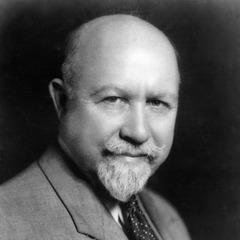
Walter Russell
Walter Russell

Walter Russell was an American author, philosopher, and artist, born in 1871 and died in 1963. He was known for his unique worldview and understanding of the universe, with works such as 'The Secret of the Universe'. more

You May Also Like

“At the moment of their inception, thoughts can be considered mental images or ideas. As the frequencies become more solid, in our opinion, thoughts could be considered something like emotions or emotion generating ideas. As the frequency of a thought comes closer to what we would consider physical reality, this thought could then be called a belief. Beliefs become assumptions and these assumptions soon become facts. Within short order, and under favorable conditions, facts become objects or events in what we call physical reality.”

“She still loved the profession and enjoyed the lives and piece to cameras, but she knew it was all a tad too farcical at times. There were far too many stories they reported and forgot. Far too many conflicts that were once headlines and had captured the imaginations of many now awaited resolution, stale and unwanted as yesterday’s tea. It was hard to keep up your spirit when you started realizing it was just a job after all and that a headline did not change someone’s destiny. Except maybe the reporter’s if she or he was picked up by a rival channel for better pay. So getting into the profession wanting to make a difference and working for the greater good as the journalists of yore had done was certainly not an option anymore.”

“But Sir, he works with NT? Why would he tell us where to go? Aren’t we the competition?’ Satya asked. Nagesh shook his head gravely. ‘Actually the competition starts at the headquarters and is between the people who come on TV, and want to make sure their face is noticed by the rival channel, so that they get picked up for a higher salary. Between us camerapersons, there is no rivalry. We don’t do piece to cameras, we don’t come on TV. We do all the jostling to get you the best visuals to show on the channel. We just want to get the news to the viewers, no matter which logo is pasted on it.”

“The reason why she had chosen journalism was because of those who had done so before her. Stalwart women and men who reported stories in the days before the Internet. Before it was fashionable to learn Mass Communication. A long time before being a TV reporter and calling up your family to see your face beamed to their homes was an in thing. They were those who had left their families behind as they pursued the truth, opting to go to jail when the government hounded them to reveal their sources. Men and women that would rather quit than write editorials the management wanted them to write. Journalists who never wrote a word they would have to disown. Journalists who took their last breath as they wrote an article was true to what they believed in. They would never sit down and take stock of the stories they had covered and written saying, “So what if twenty of these are non-stories, I at least had five I believed in.”

“Today, reports of the day’s events are conveyed to the viewing public by way of alternate universes, The Fox News cable channel conveys its version of reality, while at the other end of the ideological spectrum MSNBC presents its version. They and their many counterparts on radio are more the result of an economic dynamic than a political one. Dispatching journalists into the field to gather information costs money; hiring a glib bloviator is relatively cheap, and inviting opinionated guests to vent on the air is entirely cost-free. It wouldn’t work if it weren’t popular, and audiences, it turns out, are endlessly absorbed by hearing amplified echoes of their own biases. It’s divisive and damaging to the healthy functioning of our political system, but it’s also indisputably inexpensive and, therefore, good business.”