Quotessence
Home / Quotes / Quote by Augusten Burroughs

Quote by Augusten Burroughs

“My mother is from Cairo, Georgia. This makes everything she says sound like it went through a curling iron. Other people sound flat to my ear; their words just hang in the air. But when my mother says something, the ends curl.”

Quote by Augusten Burroughs

Work

Running With Scissors

Running With Scissors is a candid and humorous memoir that delves into the author's tumultuous childhood and the chaotic world of their family. The narrative takes readers through a series of bizarre and often disturbing experiences, offering a unique perspective on the human condition and the search for identity. more

Author
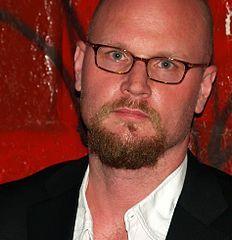
Augusten Burroughs
Augusten Burroughs

Augusten Burroughs is an American writer born on October 23, 1965. Known for his memoirs, his works, such as 'Dry' and 'Running with Scissors,' have gained widespread popularity and critical acclaim. more

You May Also Like

“Practical jokes are a demonstration that the distinction between seriousness and play is not a law of nature but a social convention which can be broken, and that a man does not always require a serious motive for deceiving another. Two men, dressed as city employees, block off a busy street and start digging it up. The traffic cop, motorists and pedestrians assume that this familiar scene has a practical explanation – a water main or an electric cable is being repaired – and make no attempt to use the street. In fact, however, the two diggers are private citizens in disguise who have no business there. All practical jokes are anti-social acts, but this does not necessarily mean that all practical jokes are immoral. A moral practical joke exposes some flaw of society which is hindrance to a real community or brotherhood. That it should be possible for two private individuals to dig up a street without being stopped is a just criticism of the impersonal life of a large city where most people are strangers to each other, not brothers; in a village where all inhabitants know each other personally, the deception would be impossible.”

“Iago’s treatment of Othello conforms to Bacon’s definition of scientific enquiry as putting Nature to the Question. If a member of the audience were to interrupt the play and ask him: "What are you doing? could not Iago answer with a boyish giggle, "Nothing. I’m only trying to find out what Othello is really like"? And we must admit that his experiment is highly successful. By the end of the play he does know the scientific truth about the object to which he has reduced Othello. That is what makes his parting shot, What you know, you know, so terrifying for, by then, Othello has become a thing, incapable of knowing anything. And why shouldn’t Iago do this? After all, he has certainly acquired knowledge. What makes it impossible for us to condemn him self-righteously is that, in our culture, we have all accepted the notion that the right to know is absolute and unlimited. […] We are quite prepared to admit that, while food and sex are good in themselves, an uncontrolled pursuit of either is not, but it is difficult for us to believe that intellectual curiosity is a desire like any other, and to realize that correct knowledge and truth are not identical. To apply a categorical imperative to knowing, so that, instead of asking, "What can I know?" we ask, "What, at this moment, am I meant to know?" – to entertain the possibility that the only knowledge which can be true for us is the knowledge we can live up to – that seems to all of us crazy and almost immoral. But, in that case, who are we to say to Iago – "No, you mustn’t.”

“All practical jokes, friendly, harmless or malevolent, involve deception, but not all deceptions are practical jokes. The two men digging up the street, for example, might have been two burglars who wished to recover some swag which they knew to be buried there. But, in that case, having found what they were looking for, they would have departed quietly and never been heard of again, whereas, if they are practical jokers, they must reveal afterwards what they have done or the joke will be lost. The practical joker must not only deceive but also, when he has succeeded, unmask and reveal the truth to his victims. The satisfaction of the practical joker is the look of astonishment on the faces of others when they learn that all the time they were convinced that they were thinking and acting on their own initiative, they were actually the puppets of another’s will. Thus, though his jokes may be harmless in themselves and extremely funny, there is something slightly sinister about every practical joker, for they betray him as someone who likes to play God behind the scenes. […] The success of a practical joker depends upon his accurate estimate of the weaknesses of others, their ignorances, their social reflexes, their unquestioned presuppositions, their obsessive desires, and even the most harmless practical joke is an expression of the joker’s contempt for those he deceives.”

“As his wife, Emilia must know Iago better than anybody else. She does not know, any more than the others, that he is malevolent, but she does know that her husband is addicted to practical jokes. What Shakespeare gives us in Iago is a portrait of a practical joker of a peculiarly appalling kind, and perhaps the best way of approaching the play is by a general consideration of the Practical Joker.”