“Every day, hundreds of observations and experiments pour into the hopper of the scientific literature. Many of them don't have much to do with evolution - they're observations about the details of physiology, biochemistry, development, and so on - but many of them do. And every fact that has something to do with evolution confirms its truth. Every fossil that we find, every DNA molecule that we sequence, every organ system that we dissect, supports the idea that species evolved from common ancestors. Despite innumerable possible observations that could prove evolution untrue, we don't have a single one. We don't find mammals in Precambrian rocks, humans in the same layers as dinosaurs, or any other fossils out of evolutionary order. DNA sequencing supports the evolutionary relationships of species originally deduced from the fossil record. And, as natural selection predicts, we find no species with adaptations that only benefit a different species. We do find dead genes and vestigial organs, incomprehensible under the idea of special creation. Despite a million chances to be wrong, evolution always comes up right. That is as close as we can get to a scientific truth.”
Quote by Jerry A. Coyne
Work
Why Evolution Is True
Why Evolution Is True delves into the foundational principles of evolutionary biology, presenting a rigorous defense of the theory through a wealth of scientific evidence. The book covers key concepts such as natural selection, genetic variation, and the fossil record, offering a clear and accessible explanation of how evolution shapes life on Earth. more
Author
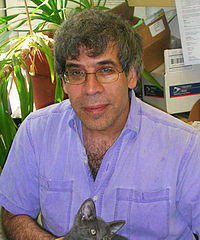
Jerry A. Coyne
Jerry A. Coyne is a renowned evolutionary biologist and writer, born on December 30, 1949. He is a professor at the University of Chicago, focusing on evolutionary biology and genetics. Coyne is known for his in-depth research on evolutionary theory and his contributions to science popularization. more
You May Also Like
Source: The Love of Devotion
Source: Wieland and Memoirs of Carwin the Biloquist
Source: Hunter's Moon: A Novel in Stories
Source: What They Asked Me: The Fear of Living and Dying Young
Source: Time Out of Mind