Quotessence
Home / Quotes / Quote by Sebastian Barry

Quote by Sebastian Barry

“And of course I started to cry. Not for myself strangely enough, though I am sure I could have, with capital and interest, but no, not for myself. For my mother? Who can really itemise the cause of our human tears?”

Quote by Sebastian Barry

Work

The Secret Scripture

In this novel, an elderly woman reflects on her life, sharing her personal history and the secrets she has kept. The narrative intertwines her past with her present, offering a poignant exploration of identity, mental health, and the complexities of human experience. more
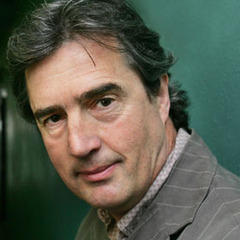
Author

Sebastian Barry
Sebastian Barry

Sebastian Barry is an Irish playwright known for his profound literary style and unique perspective on history. His works have won numerous literary awards, including the Nobel Prize in Literature. more

You May Also Like

“I turned to go home. Street lights winked down the street all the way to town. I had never seen our neighborhood from this angle. There were Miss Maudie’s, Miss Stephanie’s—there was our house, I could see the porch swing—Miss Rachel’s house was beyond us, plainly visible. I could even see Mrs. Dubose’s. I looked behind me. To the left of the brown door was a long shuttered window. I walked to it, stood in front of it, and turned around. In daylight, I thought, you could see to the postoffice corner. Daylight… in my mind, the night faded. It was daytime and the neighborhood was busy. Miss Stephanie Crawford crossed the street to tell the latest to Miss Rachel. Miss Maudie bent over her azaleas. It was summertime, and two children scampered down the sidewalk toward a man approaching in the distance. The man waved, and the children raced each other to him. It was still summertime, and the children came closer. A boy trudged down the sidewalk dragging a fishingpole behind him. A man stood waiting with his hands on his hips. Summertime, and his children played in the front yard with their friend, enacting a strange little drama of their own invention. It was fall, and his children fought on the sidewalk in front of Mrs. Dubose’s. The boy helped his sister to her feet, and they made their way home. Fall, and his children trotted to and fro around the corner, the day’s woes and triumphs on their faces. They stopped at an oak tree, delighted, puzzled, apprehensive. Winter, and his children shivered at the front gate, silhouetted against a blazing house. Winter, and a man walked into the street, dropped his glasses, and shot a dog. Summer, and he watched his children’s heart break. Autumn again, and Boo’s children needed him. Atticus was right. One time he said you never really know a man until you stand in his shoes and walk around in them. Just standing on the Radley porch was enough.”