Quotessence
Home / Quotes / Quote by Luigi Pirandello

Quote by Luigi Pirandello

“In the sense, that is, that the author who created us alive no longer wished, or was no longer able, materially to put us into a work of art. And this was a real crime, sir; because he who has had the luck to be born a character can laugh even at death. He cannot die. The man, the writer, the instrument of the creation will die, but his creation does not die. And to live for ever, it does not need to have extraordinary gifts or to be able to work wonders.”

Quote by Luigi Pirandello

Work

Six Characters in Search of an Author

This play delves into the complexities of human existence, examining themes of identity, authorship, and the blurred lines between reality and fiction. The characters, each with their own unique backstories, embark on a quest for recognition and meaning, leading the audience through a thought-provoking exploration of the human condition. more

Author
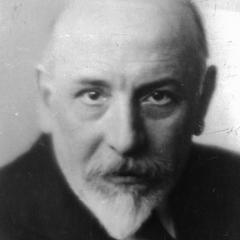
Luigi Pirandello
Luigi Pirandello

Luigi Pirandello, born on June 28, 1867, and died on December 10, 1936, was an Italian dramatist. His works are known for their unique style and profound philosophical insights, profoundly influencing 20th-century drama. more

You May Also Like

“Let us return to Benjamin Rush, who foresaw the revolutionary implications of Benjamin [Lay]'s philosophy. Writing after the abolitionist movement had burst into existence during the "age of revolution," Rush was acutely conscious that Benjamin had been a lonely fighter against slavery for forty long years, suffering endless persecution, ridicule, and repression, without a movement to support and sustain him. Rush saw that his very survival took rare strength, confidence, certitude, and character. He sought to turn the experience into an object lesson for activists of his own time. The "benefactors of mankind," he continued, must not "despair, if they do not see the fruits of their benevolent proportions, or undertakings, during their lives." Wherever the "seed of truth or virtue" is planted, it will "preserve and carry with it the principle of life." Some seeds bear fruit quickly, Rush explained, but the "most valuable of them, like the venerable oak, are centuries in the growing." Like the fearless Benjamin Lay, these giant oaks do not wither. "They exist and bloom for ever.”

“Humans are worshipping creatures, and even when they don’t consciously or even unconsciously worship any kind of god they are all involved in the adoring pursuit of something greater than themselves. Worship transforms humans, all of us, all the time, since you become like what you worship: those who worship money, power or sex have their characters formed by those strange powers, so that little by little the money-worshipper sees and experiences the world in terms of financial opportunities or dangers, the power-hungry person sees and experiences the world and other humans in terms of chances to gain power or threats to existing power, and the sex-worshipper sees the world in terms of possible conquests (that word is interesting in itself) or rivals. Those who consciously and deliberately choose not to worship those gods still have a range of others to select from, each of which will be character-forming in various ways.”

“My, ludzie, jesteśmy szczęśliwsi, kiedy czujemy się związani z innymi. Oczywiście za tym, co nas uszczęśliwia, musi stać coś więcej niż tylko zaspokojenie tęsknoty za miłością, przyjaźnią i wspólnotą. Na pewno ludzie pragną gdzieś przynależeć, tylko często nie są pewni, jak to osiągnąć.”

“Ngo Diem was heard to say, “I want a repressive machine controlling the whole of the country of South Vietnam from Saigon to the remotest villages. You shall apply massacres, torture, deportations, and mass imprisonment while conducting constant raids. You shall make the population so fearful of this government that no-one shall ever dare to become a revolutionary or any other kind of outlaw!” (A Gracious Enemy & After the War Volume Two)”