Quotessence
Home / Quotes / Quote by Tennessee Williams

Quote by Tennessee Williams

“The rest of my days I'm going to spend on the sea. And when I die, I'm going to die on the sea. You know what I shall die of? I shall die of eating an unwashed grape. One day out on the ocean I will die--with my hand in the hand of some nice looking ship's doctor, a very young one with a small blond moustache and a big silver watch. "Poor lady," they'll say, "The quinine did her no good. That unwashed grape has transported her soul to heaven.”

Quote by Tennessee Williams

Work

A Streetcar Named Desire

Tennessee Williams' 'A Streetcar Named Desire' is a profound exploration of the complexities of human emotion. Set in the 1940s, the play delves into the psychological turmoil of Blanche DuBois, a fragile woman who seeks refuge with her sister, Stella, and her brother-in-law, Stanley. The narrative unfolds in a small, rundown apartment in New Orleans, where the characters' desires and obsessions collide, leading to a tragic climax. The play is renowned for its raw emotional intensity and Williams' poetic language, making it a cornerstone of American theater. more

Author
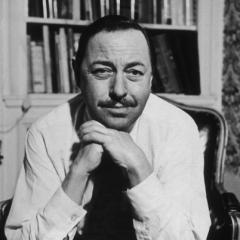
Tennessee Williams
Tennessee Williams

American playwright, renowned for his profound psychological portrayals and unique dramatic style. His notable works include 'A Streetcar Named Desire' and 'The Glass Menagerie'. more

You May Also Like

“The system that aims at educating our boys and girls in the same manner as in the circus where the trainer teaches the lion to sit on a stool, has not understood the true meaning of education itself. Instead of being like a circus where the trainer uses his stick to make animals do stunts to serve the interest of the audience, the system of education should be like an Orchestra where the conductor waves his stick to orchestrate the music already within the musicians’ heart in the most beautiful manner. The teacher should be like the conductor in the orchestra, not the trainer in the circus.”

“If education were the same as information, the encyclopedias would be the greatest sages in the world.”

“Предписывать другим правила счастья всегда казалось мне нелепостью, братец, а настаивать на их выполнении - тиранством. Заблуждение это всеобщее, я знаю, но оно все-таки заблуждение. И если оно нелепо вообще, то нелепее всего в отношении брака, в котором счастье покоится всецело на взаимной любви супругов. Поэтому я всегда считал, что родители поступают неразумно, желая выбирать за детей: ведь заставить полюбить - затея безнадежная; больше того - любовь до такой степени ненавидит принуждение, что для нее в силу какой-то несчастной, во неисцелимой извращенности нашей природы, невыносимы даже уговоры. Однако я согласен, что, хотя родители поступают неумно, пытаясь навязывать свою волю, с ними в таких случаях все же следует советоваться и, пожалуй, даже необходимо признать за ними право запрета.”

“The point is, education in its truest form, is the foundation of all human endeavors. It is the most noble of all the civilized elements of human consciousness. Education enables the humans to achieve their fullest mental and physical potential in both personal and social life. The ability of being educated is what distinguishes humans from animals. You can teach a cockatoo to repeat a bunch of vocabularies, but you cannot teach it to construct a space shuttle and go to the moon.”

“Education enables the humans to achieve their fullest mental and physical potential in both personal and social life.”

“Instead of being like a circus where the trainer uses his stick to make animals do stunts to serve the interest of the audience, the system of education should be like an Orchestra where the conductor waves his stick to orchestrate the music already within the musicians’ heart in the most beautiful manner. The teacher should be like the conductor in the orchestra, not the trainer in the circus.”