“And what does it amount to?" said Satan, with his evil chuckle. "Nothing at all. You gain nothing; you always come out where you went in. For a million years the race has gone on monotonously propagating itself and monotonously reperforming this dull nonsense--to what end? No wisdom can guess! Who gets a profit out of it? Nobody but a parcel of usurping little monarchs and nobilities who despise you; would feel defiled if you touched them; would shut the door in your face if you proposed to call; whom you slave for, fight for, die for, and are not ashamed of it, but proud; whose existence is a perpetual insult to you and you are afraid to resent it; who are mendicants supported by your alms, yet assume toward you the airs of benefactor toward beggar; who address you in the language of master to slave, and are answered in the language of slave to master; who are worshiped by you with your mouth, while in your heart--if you have one--you despise yourselves for it. The first man was a hypocrite and a coward, qualities which have not yet failed in his line; it is the foundation upon which all civilizations have been built.”
Quote by Mark Twain
Work
The Mysterious Stranger
This book is a philosophical novel that delves into complex ideas such as fate, destiny, and the nature of reality. The story follows the enigmatic arrival of a stranger in a small town, whose presence challenges the beliefs and perceptions of the townspeople. The narrative is known for its intricate and thought-provoking exploration of existential themes. more
Author
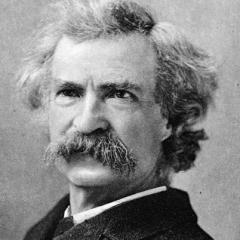
Mark Twain
Mark Twain, born Samuel Langhorne Clemens, was a renowned American author and humorist in the 19th century. His works are characterized by humor, satire, and profound social insight, with notable novels such as 'The Adventures of Tom Sawyer' and 'The Adventures of Huckleberry Finn'. more
You May Also Like
Source: The Royal Physician's Visit
“Who has a book of all that monarchs do, He’s more secure to keep it shut than shown.”
Source: Pericles
Source: The Adventures of Huckleberry Finn
Source: The Great Hand Book of Quotes
Source: Bringing Nature Home: How Native Plants Sustain Wildlife in Our Gardens
Source: The Crucible