Quotessence
Home / Quotes / Quote by Charles Bukowski

Quote by Charles Bukowski

Author

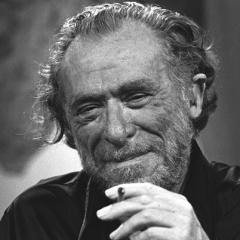
Charles Bukowski
Charles Bukowski

Charles Bukowski, born on August 16, 1920, was an influential American poet. Known for his unique style and profound depiction of the lives of the underclass in America, he is considered one of the representatives of the Beat Generation. more

You May Also Like

“Economics [...] maximizing models are really arguing is that “people will always seek to maximize something,” [...] All they really add to analysis is a set of assumptions about human nature. The assumption, most of all, that no one ever does anything primarily out of concern for others; that whatever one does, one is only trying to get something out of it for oneself. In common English, there is a word for this attitude. It’s called “cynicism.” Most of us try to avoid people who take it too much to heart. In economics, apparently, they call it “science.”

“Your connection with any ethnic group should be determined by social factors, such as your attitude to the widespread patterns of behavior and style of thinking in this group. If you feel strange in this social environment, it means that you cannot belong to it. Therefore, national identity should be a rational choice made by you in your adult life and cannot be automatically identified at birth.”

“Do you have an audience in mind when writing? (March 2010 Bookgeeks interview) In terms of story, the only audience I have in mind is me. I’m very much aware that I can’t please everyone when it comes to story, so I might as well try to please myself. But in terms of communication with the reader, I am very aware of the audience. Readers can’t hear my tone of voice or watch my expressions; a sheet of white paper and a series of little black marks is all they have – and via that sheet of paper and series of little black marks I need to convey an entire universe, I need to make characters who breath. I can’t do that without bearing the audience in mind.”

“Tom Paine generally took a critical stance when dealing with religion and the church, but in 1775, in an essay entitled, "Thoughts on Defensive War" he wrote as follows: "In the barbarous ages of the world, men in genernal had no liberty. the strong governed the weak a will; till the coming of Christ there was no sucht thing as political freedom in any part of the world... The Romans held the world in slavery and were themselves slaves of their emperors... Wherefore political as well as spiritual freedom is the gift of God through Christ”