“Dying was nothing and he had no picture of it nor fear of it in his mind. But living was a field of grain blowing in the wind on the side of a hill. Living was a hawk in the sky. Living was an earthen jar of water in the dust of the threshing with the grain flailed out and the chaff blowing. Living was a horse between your legs and a carbine under one leg and a hill and a valley and the hills beyond.”
Quote by Ernest Hemingway
Work
For Whom the Bell Tolls
This classic novel delves into the intense experiences of a group of individuals during the tumultuous Spanish Civil War. The narrative follows Robert Jordan, an American dynamiter, as he navigates the complexities of love and the harsh realities of war. The story is rich with philosophical musings on the nature of life and death, making it a profound exploration of human existence. more
Author
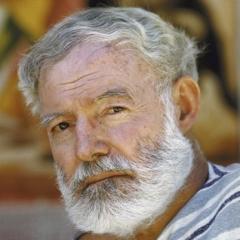
Ernest Hemingway
American author known for his concise and forceful writing style, as well as his profound insights into life. Hemingway's works cover a wide range of themes including war, adventure, and love, with notable titles such as 'The Old Man and the Sea' and 'A Farewell to Arms'. more
You May Also Like
Source: Looking for Alaska
Source: A Dance with Dragons
Source: My Love Lies Bleeding
Source: Paper Towns
Source: Galloping with Light - Einstein, Relativity, and Folklore
Source: Tuesdays With Morrie: An old man, a young man, and life's greatest lesson
“the word "dying" was not synonymous with "useless.”
Source: Tuesdays With Morrie: An old man, a young man, and life's greatest lesson
Source: Tuesdays With Morrie: An old man, a young man, and life's greatest lesson
Source: Taking It With You: Everybody knows you can't take anything with you when you die... almost everybody.
Source: Tuesdays With Morrie: An old man, a young man, and life's greatest lesson