“The word psychogeography, suggested by an illiterate Kabyle as a general term for the phenomena a few of us were investigating around the summer of 1953, is not too inappropriate. It does not contradict the materialist perspective of the conditioning of life and thought by objective nature. Geography, for example, deals with the determinant action of general natural forces, such as soil composition or climatic conditions, on the economic structures of a society, and thus on the corresponding conception that such a society can have of the world. Psychogeography could set for itself the study of the precise laws and specific effects of the geographical environment, whether consciously organized or not, on the emotions and behavior of individuals. The charmingly vague adjective psychogeographicalcan be applied to the findings arrived at by this type of investigation, to their influence on human feelings, and more generally to any situation or conduct that seems to reflect the same spirit of discovery. It has long been said that the desert is monotheistic. Is it illogical or devoid of interest to observe that the district in Paris between Place de la Contrescarpe and Rue de l’Arbalète conduces rather to atheism, to oblivion and to the disorientation of habitual reflexes?”
Quote by Guy Debord
Author
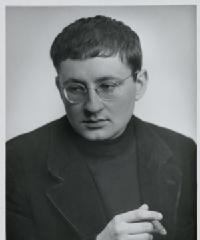
Guy Debord
Guy Debord was a French writer, filmmaker, and philosopher, born on December 28, 1931, and died on November 30, 1994. He was a founding member of the International Situationist Movement and is known for his critical analysis of consumerism, mass culture, and urban life. more
You May Also Like
Source: Within Walking Distance: Creating Livable Communities for All
Source: Dystopia: How The Tyranny of Specialists Fragment African Cities
Source: Places of the Heart: The Psychogeography of Everyday Life
Source: King of Morning, Queen of Day
Source: Le Droit À La Ville
Source: Perempuan Luka Kalis Kecewa
Source: Ex Machina, Vol. 1: The First Hundred Days
Source: The Australian Century