“The conclusion that race is a serious and durable social fault line is not a popular one in the social sciences. Many scholars have downplayed its importance, and have insisted that class differences are the real cause of social conflict. Political scientist Walker Connor, who has taught at Harvard, Dartmouth, and Cambridge, has sharply criticized his colleagues for ignoring ethnic loyalty, which he calls ethnonationalism. He wrote of “the school of thought called ‘nation-building’ that dominated the literature on political development, particularly in the United States after the Second World War:” 'The near total disregard of ethnonationalism that characterized the school, which numbered so many leading political scientists of the time, still astonishes. Again we encounter that divorce between intellectual theory and the real world.' He explained further: 'To the degree that ethnic identity is given recognition, it is apt to be as a somewhat unimportant and ephemeral nuisance that will unquestionably give way to a common identity . . . as modern communication and transportation networks link the state’s various parts more closely.' However: “There is little evidence of modern communications destroying ethnic consciousness, and much evidence of their augmenting it.” Prof. Connor came close to saying that any scholar who ignores ethnic loyalty is dishonest: '[H]e perceives those trends that he deems desirable as actually occurring, regardless of the factual situation. If the fact of ethnic nationalism is not compatible with his vision, it can thus be willed away. . . . [T]he treatment calls for total disregard or cavalier dismissal of the undesired facts.' This harsh judgment may not be unwarranted. Robert Putnam, mentioned above for his research on how racial diversity decreases trust in American neighborhoods, waited five years to publish his data. He was displeased with his findings, and worked very hard to find something other than racial diversity to explain why people in Maine and North Dakota trusted each other more than people in Los Angeles. Setting aside the reluctance academics may have for publishing data that conflict with current political ideals, Prof. Connor wrote that scholars discount racial or ethnic loyalty because of “the inherent limitations of rational inquiry into the realm of group identity.” Social scientists like to analyze political and economic interests because they are clear and rational, whereas Prof. Connor argues that rational calculations “hint not at all at the passions that motivate Kurdish, Tamil, and Tigre guerrillas or Basque, Corsican, Irish, and Palestinian terrorists.” As Chateaubriand noted in the 18th century: “Men don’t allow themselves to be killed for their interests; they allow themselves to be killed for their passions.” Prof. Connor adds that group loyalty is evoked “not through appeals to reason but through appeals to the emotions (appeals not to the mind but to the blood).” Academics do not like the unquantifiable, the emotional, the primitive—even if these things drive men harder than the practical and the rational—and are therefore inclined to downplay or even disregard them.”
Quote by Jared Taylor
Work
White Identity: Racial Consciousness in the 21st Century
Browse quotes and source details for this work. more
Author
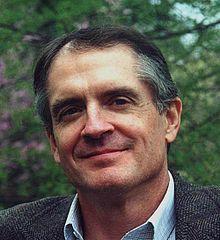
Jared Taylor
Jared Taylor, born on September 15, 1951, is an American journalist known for his views on racism and immigration issues. He was the editor of 'American Renaissance' magazine and has contributed articles to various publications, including 'The American Conservative' and 'The New American'. more
You May Also Like
Source: Joyful Militancy: Building Thriving Resistance in Toxic Times
Source: Prins Caspian
“Flattery looks like friendship and honesty looks like enemy.”
Source: Wealth of Words
Source: Giant Country
“A single seed holds within it the potential of giving rise to forests beyond measure.”
Source: The Intimacy Struggle: Revised and Expanded for All Adults