Quotessence
Home / Quotes / Quote by Elie Wiesel

Quote by Elie Wiesel

“Why had they arrested me? 'Because of a word, perhaps, or a silent grimace,' Razziel Paritus suggested, stroking his beard. 'Or for something your parents were supposed to have done or said. In this country denouncing people is a social duty, a moral imperative, a kind of state religion. It's also possible they arrested you for no reason at all. That your only crime is your innocence.”

Quote by Elie Wiesel

Work

The Judges

Browse quotes and source details for this work. more

Author

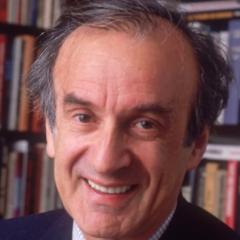
Elie Wiesel
Elie Wiesel

A renowned Jewish author and Nobel Peace Prize laureate, Elie Wiesel is known for his profound literary achievements and for recording and spreading the history of the Holocaust as a survivor. His works deeply reveal the terror of the Nazi Holocaust and the universal nature of human suffering. more

You May Also Like

“Like all obsessive characters, Merrick was inordinately boring. He was uninterested in books, music, politics, people or, seemingly, even sex. His studied politeness was a mask that must conceal a slow-boiling malevolence. I can't see what he could have responded to in an irrepressible jokesmith like Jimmy Porter. He could squeeze out a frosty smile only when someone like a lovingly hated star collapsed with coronary.”

“The rationing system that was set up in Britain at the outbreak of the hostilities was as revolutionary as anything the Communists could have dreamed up. Almost every basic item of food was rationed , as were other essentials such as clothing and household goods. Nobody was entitled to more food if they were richer, or of a higher social standing than their neighbors -the only people entitled to better rations were those in the armed forces, or those in occupations that required heavy physical labour. As a consequence, the general health of the population actually improved (italics) during the war: by the late 1940's infant mortality rates in England were in steady decline, and deaths from a variety of disease had also dropped substantially since the prewar years. From the standpoint of public health, the war made Britain a much fairer society. There were other changes in Britain during the war that had a similar effect, such as the introduction of conscription to people of all classes, and both sexes. "Social and sexual distinctions were swept away.' wrote Theodora FitzGibbon. 'and when a dramatic change such as that takes place, it never goes back quite in the same way.”