“When we hear the old bells ringing out on a Sunday morning, we ask ourselves: can it be possible? This for a Jew, crucified two thousand years ago, who said he was the son of God. The proof of such a claim is wanting. Within our times the Christian religion is surely an antiquity jutting out from a far-distant olden time; and the fact that people believe such a claim...is perhaps the oldest part of this heritage. A god who conceives children with a mortal woman; a wise man who calls us to work no more; to judge no more; but to heed the signs of the imminent apocalypse; a justice that accepts the innocent man as a proxy sacrifice; someone who has his disciplines drink his blood; prayers for miraculous interventions; sins against a god, atoned for by a god; fear of the afterlife, to which death is the gate; the figure of the cross as a symbol, in a time that no longer knows the purpose and shame of the cross - how horribly all this wafts over us, as from the grave of the ancient past! Are we to believe that such things are still believed?”
Quote by Friedrich Nietzsche
Work
This book is a compilation of essays that delve into the complexities of human existence, focusing on the essence of free spirits and their place in the world. It offers insights into the human psyche, the pursuit of knowledge, and the search for meaning. more
Author
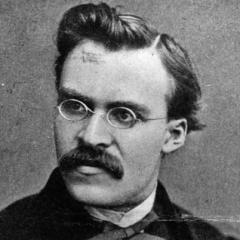
Friedrich Nietzsche was a German philosopher, cultural critic, poet, and writer whose works have had a profound impact on subsequent philosophy, literature, and thought. His ideas revolve around concepts such as the 'will to power', the 'Übermensch', and the 'eternal recurrence'. more
You May Also Like
“we all cope with these things in our own ways.”
“Here is the thing about jealousy. It's not a good look.”
“I have no idea when I'll wear it, but I have to have it.”
“Fancy a friendly beer with an exhausted corporate wage slave?”