Quotessence
Home / Quotes / Quote by Theodore Sturgeon

Quote by Theodore Sturgeon

“It wasn't real conservatism at all, of course, but an unthought longing for the dear old days when one could predict what would be there tomorrow, if not next week. Unable to get the big picture, they welcomed the conveniences, the miniaturization of this and the speed of that, and then they were angrily confused when their support of these things changed their world.”

Quote by Theodore Sturgeon

Work

Venus Plus X

Browse quotes and source details for this work. more

Author

Theodore Sturgeon
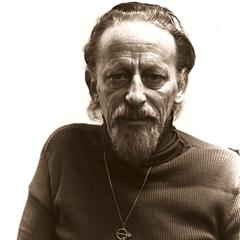
Theodore Sturgeon

Theodore Sturgeon (February 26, 1918 – May 8, 1985) was an American science fiction writer and short story master, known for his unique narrative style and profound humanistic concerns. Born in Staten Island, New York, as Edward Hamilton Waldo, he later adopted his stepfather's surname. Active from the 1940s to the 1970s, Sturgeon wrote classic stories like 'Microcosmic God' and 'More Than Human,' and coined 'Sturgeon's Law'—'90% of science fiction is crud, but then 90% of everything is crud.' His works explored human nature, emotion, and social margins, deeply influencing later SF. He won Hugo and Nebula Awards and is often called 'the Shakespeare of science fiction.' more

You May Also Like

“Human dynamism cannot be manipulated or switched on like that of a machine. It cannot be engineered or programmed. Human beings are created, not constructed – that is why they love to create their own reality. Human action cannot be explained by the laws of thermodynamics or by that of molecular biology. The wellspring of human action comes from the human spirit. The dwelling space of this spirit is our being.”

“The chef sighed. “They talk about three gods in one or one in three, depending on who you ask.” He rolled his eyes. “What a tale. God arranges to torture and kill his son, who is also himself, in order to forgive sins not yet committed. It makes no sense. If a compassionate God wanted to forgive, why not just forgive? I’ll tell you why: There’s not enough drama in that. No blood, no pathos, it’s flat. But human sacrifice to atone for sin is a compelling idea borrowed from paganism. It’s primitive and emotional. It’s an old favorite.”