“Don't you believe in flying saucers, they ask me? Don't you believe in telepathy? — in ancient astronauts? — in the Bermuda triangle? — in life after death? No, I reply. No, no, no, no, and again no. One person recently, goaded into desperation by the litany of unrelieved negation, burst out "Don't you believe in anything?" Yes", I said. "I believe in evidence. I believe in observation, measurement, and reasoning, confirmed by independent observers. I'll believe anything, no matter how wild and ridiculous, if there is evidence for it. The wilder and more ridiculous something is, however, the firmer and more solid the evidence will have to be.”
Quote by Isaac Asimov
Author
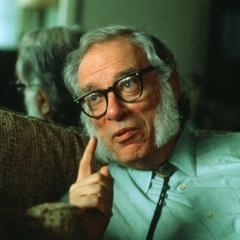
Isaac Asimov
Isaac Asimov, born on January 2, 1920 in Poland and died on April 6, 1992 in the United States, was a renowned American science fiction author, science writer, and literary critic, known as the 'Father of Science Fiction'. His works covered a wide range of science fiction themes, including robots, space exploration, and time travel, and had a profound impact on science fiction literature and the popularization of science. more