Quotessence
Home / Quotes / Quote by Victor Hugo

Quote by Victor Hugo

“Je te cherchai. Je te revis. Malheur ! Quand je t’eus vue deux fois, je voulus te voir mille, je voulus te voir toujours. Alors, — comment enrayer sur cette pente de l’enfer ? — alors je ne m’appartins plus. L’autre bout du fil que le démon m’avait attaché aux ailes, il l’avait noué à ton pied. Je devins vague et errant comme toi. Je t’attendais sous les porches, je t’épiais au coin des rues, je te guettais du haut de ma tour. Chaque soir, je rentrais en moi-même plus charmé, plus désespéré, plus ensorcelé, plus perdu !”

Quote by Victor Hugo

Work

Notre-Dame de Paris

Victor Hugo's Notre-Dame de Paris is a historical novel that delves into the life of Quasimodo, a deformed bell-ringer in the iconic Notre-Dame Cathedral. The story is rich with historical detail and vividly portrays the social and religious tensions of the time. more

Author

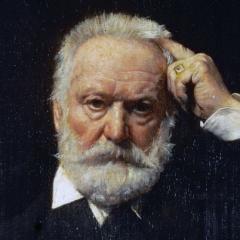
Victor Hugo
Victor Hugo

Victor Hugo, a French romantic poet, novelist, and playwright, was born on February 26, 1802, and died on May 22, 1885. He is considered one of the greatest writers in French literary history, known for his profound humanistic concerns and rich imagination. more

You May Also Like

“His loyal and eager nature, brought for the first time to the test of love, gave itself utterly, and demanded a gift as utter without the reservation of one particle of the heart. He admitted no sharing in friendship. Being ready to sacrifice all for his friend, he thought it right and even necessary that his friend should wholly sacrifice himself and everything for him. But he was beginning to feel that the world was not built on the model of his own inflexible character, and that he was asking things which others could not give.”

“I cannot express it; but surely you and everybody have a notion that there is or should be an existence of yours beyond you. What were the use of my creation, if I were entirely contained here? My great miseries in this world have been Heathcliff’s miseries, and I watched and felt each from the beginning: my great thought in living is himself. If all else perished, and he remained, I should still continue to be; and if all else remained, and he were annihilated, the universe would turn to a mighty stranger: I should not seem a part of it.—My love for Linton is like the foliage in the woods: time will change it, I’m well aware, as winter changes the trees. My love for Heathcliff resembles the eternal rocks beneath: a source of little visible delight, but necessary. Nelly, I am Heathcliff! He’s always, always in my mind: not as a pleasure, any more than I am always a pleasure to myself, but as my own being. So don’t talk of our separation again: it is impracticable; and—”