Quotessence
Home / Quotes / Quote by Stan Lee

Quote by Stan Lee

Work

Fantastic Four (1961-1998) #53

Browse quotes and source details for this work. more

Author
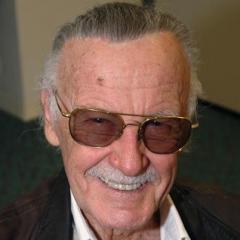
Stan Lee
Stan Lee

Stan Lee, born on December 28, 1922, is an American comic book writer, editor, and publisher. He is one of the founders of Marvel Comics and is renowned for his unique style of storytelling and the creation of iconic superhero characters. His works include Spider-Man, Iron Man, Thor, and others, which have had a profound impact on global popular culture. more

You May Also Like

“It was necessary to invent history in order to invent the future. The sense of necessity in Cromwell and Lenin (and even in Jefferson) springs from an obsession with time, change, an obsession with cause and effect that starts to make the effect seem like the cause of its own cause. The future is the cause of the past, and we play antiquarian games to reassure ourselves that the past is past and different so that we can believe that the future will be different too.”

“While David runs the financial end of the Rockefeller dynasty, Nelson runs the political. Nelson would like to be President of the United States. But, unfortunately for him, he is unacceptable to the vast majority of the grass roots of his own party. The next best thing to being President is controlling a President. Nelson Rockefeller and Richard Nixon are supposed to be bitter political competitors. In a sense they are, but that still does not preclude Rockefeller from asserting dominion over Mr. Nixon. When Mr. Nixon and Mr. Rockefeller competed for the Republican nomination in 1968, Rockefeller naturally would have preferred to win the prize, but regardless of who won, he would control the highest office in the land. You will recall that right in the middle of drawing up the Republican platform in 1960, Mr. Nixon suddenly left Chicago and flew to New York to meet with Nelson Rockefeller in what Barry Goldwater described as the "Munich of the Republican Party." There was no political reason why Mr. Nixon needed to crawl to Mr. Rockefeller. He had the convention all sewed up. The Chicago Tribune cracked that it was like Grant surrendering to Lee. In The Making of the President, 1960, Theodore White noted that Nixon accepted all the Rockefeller terms for this meeting, including provisions "that Nixon telephone Rockefeller personally with his request for a meeting; that they meet at the Rockefeller apartment…that their meeting be secret and later be announced in a press release from the Governor, not Nixon; that the meeting be clearly announced as taking place at the Vice President's request; that the statement of policy issuing from it be long, detailed, inclusive, not a summary communiqué." The meeting produced the infamous "Compact of Fifth Avenue" in which the Republican Platform was scrapped and replaced by Rockefeller's socialist plans. The Wall Street Journal of July 25, 1960, commented: "…a little band of conservatives within the party…are shoved to the sidelines… [T]he fourteen points are very liberal indeed; they comprise a platform akin in many ways to the Democratic platform and they are a far cry from the things that conservative men think the Republican Party ought to stand for…" As Theodore White put it: "Never had the quadrennial liberal swoop of the regulars been more nakedly dramatized than by the open compact of Fifth Avenue. Whatever honor they might have been able to carry from their services on the platform committee had been wiped out. A single night's meeting of the two men in a millionaire's triplex apartment in Babylon-by-the-Hudson, eight hundred and thirty miles away, was about to overrule them; they were exposed as clowns for all the world to see." The whole story behind what happened in Rockefeller's apartment will doubtless never be known. We can only make an educated guess in light of subsequent events. But it is obvious that since that time Mr. Nixon has been in the Rockefeller orbit.”

“The Council on Foreign Relations is like an establishment country club—a veritable Who’s Who of American policy-making. The mainstream press has historically given scant coverage to exactly what it is that the CFR does. The “Foreign Relations” part of the name would seem to indicate a group devoted to the study of foreign policy objectives. Indeed, on the rare occasions that the CFR is mentioned in the mainstream media, it is inevitably referred to as “an influential foreign policy think tank”—makes it even more curious that so many celebrated figures decidedly lacking in “foreign policy” experience are or have been members.”