Quotessence
Home / Quotes / Quote by Manis Friedman

Quote by Manis Friedman

Work

Doesn't Anyone Blush Anymore: Love, Marriage and the Art of Intimacy

Browse quotes and source details for this work. more

Author
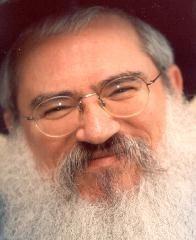
Manis Friedman
Manis Friedman

Manis Friedman, born in 1946, is an esteemed rabbi known for his dedication to religious education and spiritual leadership. He is highly respected by the community and his followers. more

You May Also Like

“Rough going had been encountered by the Masses in its efforts to remain a medium for free interpretation in a time of hysteria. Because of its pitiless reporting in trying to reveal true causes, its lack of respect for commercialized religion, and its attacks on sex taboos in art and literature, the magazine had earlier been barred from the reading rooms of many libraries, ousted from the subway and elevated news stands in New York, and refused by distributing companies of Boston and Philadelphia; and our right to use the mails in Canada had been revoked by the Dominion government”

“Whereas Philadelphia was home to the first savings bank established in the United States - Philadelphia Saving Fund Society, in the year 1816 - Philadelphia is also the city that became home to the first commercial bank established in the United States. Thirty-four years before America had its first savings bank - Philadelphia Saving Fund Society, in 1816 - the first commercial bank in the United States was established. This first American commercial bank was also established in the very same city that America’s first savings bank had been created - the city of Philadelphia.”

“However one felt about the Mummers, guys like Franny infused South Philadelphia with a hint of the carnivalesque. Any bulky white man on the street—plumber, roofer, carpenter, cop—might abruptly slide into a swoop or a twirl, buoyant and sleek as a synchronized swimmer. He might prance like a reindeer, lurch like a tyrannosaur, pulse like a rave girl in a festival crowd. He would strut one minute and complain about Mexicans the next.”

“One day a young man stood at the foot of Shackamaxon Street in Philadelphia, sugar town, 1882. Folded into his vest, a letter of reference. He had an idea that involved a railroad ticket and the millions of dead buffalo out west. If he could get those bones into railroad cars and ship them to Philadelphia, they could be heated in a sealed vessel at 700 degrees Celsius, which was 1292 degrees Fahrenheit, not easy to imagine. The super-heating would drive off the organic matter in the bones, leaving activated carbon, composed of tricalcium phosphate, calcium carbonate, and carbon. Bone charcoal. Bone black. Ivory black. Animal charcoal. Abaiser. Pigment black 9. Bone char. Carbo animalis. Buffalo black. This substance could be used to refine crude raw sugar processed from sugarcane, slave sugar, although of course the slave trade had been abolished, then as now, but there still were enslaved people, then as now. Bone char worked better than bull’s blood or egg whites or any other substance to bleach the sugar white. And the bones! The bones were everywhere, he’d heard, littering the ground, so thick that a farmer couldn’t plow without stacking them beside the fields. (197)”

“Consider the Johnson House and the Philadelphia Juneteenth Festival in Germantown together as sites of joy, freedom, celebration and resilience in the face of tremendous odds and struggle. Both operate at the intersection of Black protest, Black ritual and Black pomp and circumstance. Together, they embody the legacy and ongoing project of Black liberation, and show us exactly what it looks like in a majority-Black neighborhood in Philadelphia, a northern city that is not only the birthplace of American democracy but has its own complicated history. Together, they connect to Galveston, Texas 5, the birthplace of the Juneteenth holiday and a southern city that is 1,500 miles away.”