Quotessence
Home / Quotes / Quote by Aleksandr Solzhenitsyn

Quote by Aleksandr Solzhenitsyn

“Alex: Kabimba! You know I've also fallen hopelessly behind them because of the time I spent in prison. So what am I to do now? Elbow them aside? Smash their windows? Kabimba! Hatred and resentment will never get you anywhere. They are the most barren feelings in the world. One has to rise above that and realize that we have lost centuries or decades - we've been insulted, humiliated, but that's no reason for revenge. Nor should we try. All the same we're richer than they are. Kabimba: (indignantly) We are? Richer in what way? In what way? Alex: Because we've suffered, Kabimba. Suffering is a leveler for the soul. A contented person always has an impoverished soul. It's our job to build little by little. (scene four)”

Quote by Aleksandr Solzhenitsyn

Work

Candle in the Wind

Browse quotes and source details for this work. more

Author

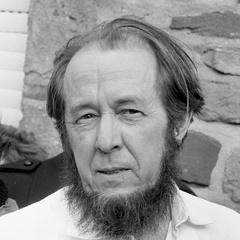
Aleksandr Solzhenitsyn

Aleksandr Solzhenitsyn, a Russian novelist, was born on December 11, 1918, and died on August 3, 2008. He is renowned for his works that profoundly exposed the dark side of the Soviet political system and is considered one of the greatest writers of the 20th century. more

You May Also Like

“... many authors have defended the moral and political importance of reducing suffering, and hardly anyone has argued against it. Yet this view has nonetheless been largely ignored in the mainstream discourse within political philosophy, in large part, I think, because it lacks texture and has limited stickiness in our minds, unlike concepts such as justice and equality, which seem more intuitively appealing to most people.”

“... the reality is that we do not live in a world in which most people are strongly dedicated to the aim of reducing suffering for all sentient beings — at least not in terms of their actual behavior. However, most people probably are willing to support policies that reduce suffering if only the cost is sufficiently low to them personally, which suggests that a promising strategy for those who are most dedicated to reducing suffering is to tap into this vast reservoir of potential support, making marginal pushes in just the right places such that our efforts inspire broad support rather than broad hostility.”

“I think about this, not like someone thinking, but like someone breathing, And I look at flowers and I smile... I don’t know if they understand me Or if I understand them, But I know the truth is in them and in me And in our common divinity Of letting ourselves go and live on the Earth And carrying us in our arms through the contented Seasons And letting the wind sing us to sleep And not have dreams in our sleep.”