Quotessence
Home / Quotes / Quote by Diane Ravitch

Quote by Diane Ravitch

“While I have never been a member of any union, I was a friend of Albert Shanker, president of the American Federation of Teachers, whom I met after my history of the New York City schools was published. His successor, Sandra Feldman, was also my friend, and I am friends with her successor, Randi Weingarten, who was elected AFT president in 2008.”

Quote by Diane Ravitch

Work

The Death and Life of the Great American School System: How Testing and Choice Are Undermining Education

This book delves into the effects of standardized testing and school choice initiatives on the quality and accessibility of education in the United States. more

Author
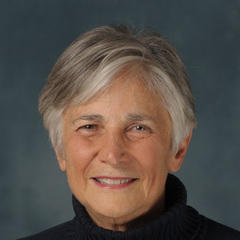
Diane Ravitch
Diane Ravitch

Diane Ravitch is an American historian and education policy analyst. She is recognized for her extensive work in the field of education, particularly her research on the history of American education and her criticism of the No Child Left Behind Act. more

You May Also Like

“The workers stayed in the plant instead of walking out, and this had clear advantages: they were directly blocking the use of strikebreakers; they did not have to act through union officials but were in direct control of the situation themselves; they did not have to walk outside in the cold and rain, but had shelter; they were not isolated, as in their work, or on the picket line; they were thousands under one roof, free to talk to one another, to form a community of struggle. Louis Adamic, a labor writer, describes one of the early sit-downs: Sitting by their machines, cauldrons, boilers and work benches, they talked. Some realized for the first time how important they were in the process of rubber production. Twelve men had practically stopped the works! . . . Superintendents, foremen, and straw bosses were dashing about. . . . In less than an hour the dispute was settled, full victory for the men.”

“Rochester became a magnet for African Americans in the twentieth century, one of many northern industrial cities that blacks flocked to during their six-decade-long Great Migration from the rural South. From 1950 to 1960, Rochester's total population had declined slightly, from about 332,000 to 319,000. But its black population had risen appreciably over the same period, tripling to nearly 24,000. Those who'd come to Smugtown were hungry for a better life. What they encountered upon their arrival, however, was mainly disappointment. Mirroring trends found across the country, many blacks in Rochester were forced to live in substandard housing as whites fled the urban core. The city's power structure remained almost exclusively white. And many blacks struggled to find decent jobs. Even though the unemployment rate in Rochester had fallen to about 2 percent in the summer of 1964, 14 percent of blacks were counted as without work. The big Kodak dollar and the lawn sprinklers of the suburbs have seemed both tantalizingly near and hopelessly far to the inner-city man," said an African American barber.”

“Say," I said, "do you guys cross picket lines?" The ChronoGuard agents looked at each other, then at the chronographs on their wrists, then at Lavoisier. The taller of the two was the first to speak. "She's right, Mr. Lavoisier, sir. I don't mind bullying and killing innocents, and I'll follow you beyond the crunch normally, but - " "But what?" asked Lavoisier angrily. "-but I am a loyal TimeGuild member. I don't cross picket lines.”

“The cities change. The bus line is different. The train runs on another track, but the scene is the same. Everyday in America, South Africa and other places in the world like them. Black people. My people. Travelin. To be cooks, janitors, housekeepers, porters, days workers, servants, Black boys, Beige girls, Brown daddies, Ebony mothers.”

“Moo inhaled, his nostrils flaring. It was decided then. Slowly, deliberately, he rose from the saddle and began to dismount. He had not sailed seven thousand miles across the world, traveled up the Mississippi River on a riverboat full of knife-wielding Kaintucks, and graduated from the University of Kentucky College of Medicine with top marks, carving a position of respect for himself and his family out of the very flesh, blood, and bone of these hills to be bullied by a trio of chubby sons of bitches in khaki shirts and armbands. He stepped to the ground before them and thumbed the three-barred cross at his throat, looking from man to man. His eyes wide open, blazing like spot lamps. "Allah maei," he said. God is with me. The first man stepped forward, cocking his fist back. "The fuck you say?”