Quotessence
Home / Quotes / Quote by Ayi Kwei Armah

Quote by Ayi Kwei Armah

Work

Two Thousand Seasons

Browse quotes and source details for this work. more
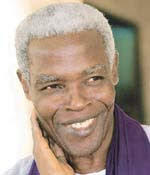
Author

Ayi Kwei Armah
Ayi Kwei Armah

Ayi Kwei Armah, born on October 28, 1939, is a Ghanaian-British writer known for his focus on social, political, and cultural issues in Africa and the post-colonial era. more

You May Also Like

“Towards that end, the soul provides you with experiences that are necessary, that purge or cleanse you. There is no such thing as a frivolous cleansing, and such experiences can take many familiar forms, such as illnesses or persistent inner sufferings. Others may be more spontaneous, the result of a sudden “aha” that hits home when you least expect it. For example, a man who rose very rapidly in the corporate world was enormously successful, but his arrogance, insecurity, and need for approval and attention made him unbearable to be around. Once his bank account was overflowing, he declared that he was being called by God to do good in the world, informed everyone that he was now a mystic, and set up a foundation to do good. But he went about all this with his old, bullish, corporate style. He had not changed inside, but would not admit that he was still a greedy, controlling, creature in spite of his declaration that he was now a mystic. Eventually, however, he met his match in a woman involved in a global project who told him that he did not qualify as a contributor, because, ‘You have an untrustworthy soul and until your soul is cleansed, we cannot have you sit among us. You will do more harm than good, in spite of your full wallet.’ He was stunned, but eventually admitted he had an agenda behind his charity work, and began the process of purification.”

“There comes a point at which you have to let go and forgive. You can start your prayer with, 'Help me to forgive because I don't want to forgive. I feel entitled to be angry even though the anger is killing me, not them. And no one really cares that I'm angry. It's destroying my life, not theirs. I want to punish someone, so I punish my kids or I punish other innocent people who have never harmed me because it is my way of punishing them. So I really don't want to forgive because then I think all my hurt will be forgotten and that feels so unfair. But what is fair? No one's hurt is fair. I just think that justice should revolve around me. So, help me to forgive, one person at a time, beginning with _______.' That's your beginning. You take it from there until you have emptied your dungeon. Whenever you add new prisoners, you will have to revisit your dungeon.”

“Teresa (Saint Teresa of Avila) herself was starved for such companionship, especially when her mystical experiences of God reached a cosmic level to which no one else could relate. If is a great comfort to be understood by others who trust and believe in the personal experiences that we share with them, especially those for which there are no witnesses....When Teresa was fifty-two years old, she met John of the Cross, who was then only twenty-five. After they exchanged their experiences of God, they recognized each other as soul companions. In John, Teresa finally found someone with whom she could share the mystery of her life with God. After they met, she no longer needed to prove or defend her experiences of the soul. (Sadly, John burned all their correspondence shortly before his death.) Teresa emphasized the need for companions on the spiritual journey. No one should travel through her Castle alone, she wrote again and again. Teresa knew firsthand the difficulty of inner work required of the soul pilgrim, who was as likely to experience a dark night of the soul, to borrow a phrase from John of the Cross, as she was to experience the light and grace of liberation.”

“Being soulful makes you desire depth. You look for depth in everything and everyone. You look for meaning in things that you encounter. Even when you meet someone for the first time you look for their soul. You are not fascinated by shine and sparkle. But you are fascinated by rawness and strength. Their 'soul' that they have held on to and not yet abandoned to the world!”

“The soul of each of us is given a unique daimon before we are born, and it has selected an image or pattern that we live on earth. This soul-companion, the daimon, guides us here; in the process of arrival, however, we forget all that took place and believe we come empty into this world. The daimon remembers what is in your image and belongs to your pattern, and therefore your daimon is the carrier of your destiny.”

“To be soulbroken is to be filled with anguish that is brought on by the loss of our love, our relationship, and ourselves, and, often it is void of validation. If you know this pain, my deepest sympathies to you, not only for your loss but for how you've been hurting.”

“Put yourself in the way of grace,' says a friend of ours, who is a monk, and a bishop; and he smiles his floating and shining smile. And truly, can there be a subject of more interest to each of us than whether or not grace exists, and the soul? And, consequent upon the existence of the soul, a whole landscape of incorruptible forces, perhaps even a source, an almost palpably suggested second universe? A world that is incomprehensible through reason? To believe in the soul---to believe in it exactly as much and as hardily as one believes in a mountain, say, or a fingernail, which is ever in view---imagine the consequences! How far-reaching, and thoroughly wonderful! For everything, by such a belief, would be charged, and changed. You wake in the morning, the soul exists, your mouth sings it, your mind accepts it. And the perceived, tactile world is, upon the instant, only half the world! How easily I travel, about halfway, through such a scenario. I believe in the soul---in mine, and yours, and the blue-jay's, and the pilot whale's. I believe each goldfinch flying away over the coarse ragweed has a soul, and the ragweed too, plant by plant, and the tiny stones in the earth below, and the grains of earth as well. Not romantically do I believe this, nor poetically, nor emotionally, nor metaphorically except as all reality is metaphor, but steadily, lumpishly, and absolutely. The wild waste spaces of the sea, and the pale dunes with one hawk hanging in the wind, they are for me the formal spaces that, in a liturgy, are taken up by prayer, song, sermon, silence, homily, scripture, the architecture of the church itself. And as with prayer, which is a dipping of oneself toward the light, there is a consequence of attentiveness to the grass itself, and the sky itself, and to the floating bird. I too leave the fret and enclosure of my own life. I too dip myself toward the immeasurable. Now winter, the winter I am writing about, begins to ease. And what, if anything, has been determined, selected, nailed down? This is the lesson of age---events pass, things change, trauma fades, good fortune rises, fades, rises again but different. Whereas what happens when one is twenty, as I remember it, happens forever. I have not been twenty for a long time! The sun rolls toward the north and I feel, gratefully, its brightness flaming up once more. Somewhere in the world the misery we can do nothing about yet goes on. Somewhere the words I will write down next year, and the next, are drifting into the wind, out of the ornate pods of the weeds of the Provincelands. Once I went into the woods to find an almost unfindable bird, a blue grosbeak. And I found it: a rough, deep blue, almost black, with heavy beak; it was plucking one by one the humped, pale green caterpillars from the leaves of a thick green tree. Then it vanished into the shadows of the leaves and, in the same moment, from the crown of the tree flew a western bluebird---little aqua thrush of the mountains, hundreds of miles from its home. It is a moment hard to top---but, I can. Once I came upon two angels, they were standing quietly, keeping guard beside a car. Light streamed from them, and a splash of flames lay quietly under their feet. What is one to do with such moments, such memories, but cherish them? Who knows what is beyond the known? And if you think that any day the secret of light might come, would you not keep the house of your mind ready? Would you not cleanse your study of all that is cheap, or trivial? Would you not live in continual hope, and pleasure, and excitement?”