Quotessence
Home / Quotes / Quote by Frank Herbert

Quote by Frank Herbert

Work

DUNE

Frank Herbert's 'DUNE' is a seminal work in the science fiction genre, known for its intricate world-building and complex political intrigue. The story follows Paul Atreides, a young nobleman who must navigate a treacherous landscape of political machinations and religious fervor. The novel is set on the desert planet Arrakis, which is rich in a valuable resource known as melange, essential for interstellar travel. 'DUNE' explores themes of religion, politics, ecology, and the human condition, and has been praised for its depth and philosophical musings. more
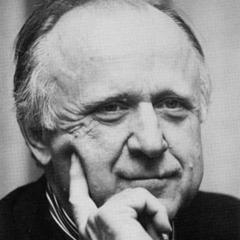
Author

Frank Herbert
Frank Herbert

Frank Herbert, born on October 8, 1920, was an influential science fiction author from the United States. His masterpiece 'Dune' is considered a classic in the science fiction genre and has had a profound impact on literature and society. more

You May Also Like

“A te plânge că nu ai atins succesul, deși ai făcut eforturi, e ca și cum te-ai plânge de faptul că acel cub de gheață nu s-a topit încă la temperaturi mai mici de zero grade. Eforturile tale nu sunt irosite, ci sunt în curs de acumulare. Rezultatele notabile apar la zero grade.”

“Muslim identity and thought in Nigeria derive from the Sufi brotherhoods of Qadiriyya and Tijaniyya, primarily as a result of the historical role of the Kanem-Borno and Sokoto caliphates in the spread of Islam. The Sufi orders and the Izalatul Bidi’a wa Ikhamatis Sunnah (People Committed to the Removal of Innovations in Islam; hereafter Izala) are the two dominant contemporary Muslim foci of identity. The disdain towards and fear of boko (Western education) arose from its historically close association with the colonial state and Christian missionaries. This also suited colonial educational policy well, as the British had no intention of widespread education anyway. The aim of colonial education, particularly in northern Nigeria, was to maintain the existing status quo by “imparting some literacy to the aristocratic class, to the exclusion of the commoner classes” (Tukur 1979: 866). By the 1930s, colonial education had produced a limited cadre of Western-educated elite, who were conscious of their education and were yearning to play a role in society. Mainly children of the aristocratic class, the type of education they received was “different from the traditional education in their various societies, and this by itself was enough to mark them out as a group” (Kwanashie 2002: 50). This new education enabled them to climb the social and economic ladder over and above their peers who had a different kind of education, Quranic education. This was the origin of the animosity and distrust between the traditionally educated and Western-educated elite in northern Nigeria. Though subordinate to the Europeans, these educated elite were perceived as collaborators by their Arabic-educated fellows. Thus the antagonism towards Western education continues in many northern Nigerian communities, which have defied government campaigns for school enrollment to this day.”

“The rejection of Western democracy derives from the same rejection of secularism but was further sharpened by the Saudi Arabian establishment’s aversion to democracy’s subversive streak and the threat it posed to the Saudi monarchy if unleashed. Saudi scholars such as Sheikh Bakr Ibn Abu Zaid consistently attacked democracy and the freedoms it flaunted as anti-Islamic. Mohammed Yusuf was heavily influenced by the writings of Saudi-based scholars such as Bakr Ibn Abu Zaid, Sheikh Abdul Aziz Ibn Abd-Allah Ibn Baaz (1910-99), and Sheikh Muhammad al-Amin ash Shanqiti (1907-73). As mentioned before, all of Yusuf’s opponents side-stepped the issue of democracy being un-Islamic, thereby making the issue appear incontestable or settled.”

“The vast majority of arrests carried out by the military appear to be entirely arbitrary, often based solely on the dubious word of a paid informant. Military sources repeatedly told Amnesty International that the informants are unreliable and often provide false information in order to get paid. One officer said: "The military uses civilian informants to get information and arrest suspects. Most of these informants are liars. They give false information to the soldiers who are desperate to simply shoot and kill. Many of the soldiers don't know about investigations. The soldiers take these rash actions mainly out of frustration, especially after seeing their colleagues killed.”