Quotessence
Home / Quotes / Quote by Gene Sharp

Quote by Gene Sharp

“It should be remembered that against a dictatorship the objective of the grand strategy is not simply to bring down the dictators but to install a democratic system and make the rise of a new dictatorship impossible. To accomplish these objectives, the chosen means of struggle will need to contribute to a change in the distribution of effective power in the society. Under the dictatorship the population and civil institutions of the society have been too weak, and the government too strong. Without a change in the imbalance, a new set of rulers can, if they wish, be just as dictatorial as the old ones. A 'palace revolution' or a coup d'etat therefore is not welcome.”

Quote by Gene Sharp

Work

From Dictatorship to Democracy

This book provides a comprehensive framework for understanding and implementing peaceful democratic transitions from authoritarian regimes. more

Author
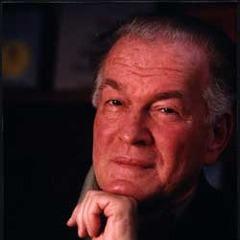
Gene Sharp
Gene Sharp

Gene Sharp, born on January 21, 1928, is a renowned political scientist and scholar. He has made significant contributions to the study of nonviolent resistance and democratic movements. Professor Sharp's work has had a profound impact on democratic movements worldwide. more

You May Also Like

“It must be remembered that some groups will ignore any constitutional provision in their aim to establish themselves as new dictators. Therefore, a permanent role will exist for the population to apply political defiance and noncooperation against would-be dictators and to preserve democratic structures, rights, and procedures.”

“Page 147: Over time, this lack of participation in the military by the white overclass could lead to an increasing divergence between the norms of the civilian and the military elites in the United States, and a declining respect for civilian authority by a heavily middle-class and working-class military. The incidents of insubordination that greeted President Clinton’s attempt to end the ban on homosexual men and women in the military showed the existence of both the cultural gap and the possible consequences.”

“Page 229: The great modern fact is the huge standing army that is a severe custodian of the law, is obedient to the orders of a civil authority and has very little political influence, exercising indirectly at best such influence as it has. Virtually invariable as that situation is in countries of European civilization, it represents a most fortunate exception, if it is not absolutely without parallel, in human history. Only a habit of a few generations standing, along with ignorance or forgetfulness of the past, can make such a situation seem normal to those of us who have lived at the end of the nineteenth and the beginning of the twentieth century, and so find it strange when we chance upon exceptions.”

“You mean to topple whoever finally claims Terra's throne and take it for yourself." "Who among my brothers is as remotely suited as I for such a position? Horus is already so rank with stolen powers that he burns from the inside out and sees it not. Perturabo might once have had the imagination to make such a leap, but it has been ground out of him. Angron or Mortarion are lords only of corpses and maggots, and as for Konrad and Fulgrim, they are not fit to rule themselves, let alone a galaxy.”

“Though the term coup d'état has been used for more than 300 years, the feasibility of the coup derives from a comparatively recent development: the rise of the modern state with its professional bureaucracy and standing armed forces. The power of the modern state largely depends on this permanent machinery which, with its archives, files, records and officials, can follow intimately and, if it so desires, control the activities of lesser organizations and individuals. "Totalitarian" states merely use more fully the detailed and comprehensive information which is available to most states, however "democratic": the instrument is largely the same though it is used differently. The growth of the modern bureaucracy has two implications which are crucial to the feasibility of the coup: the development of a clear distinction between the permanent machinery of state and the political leadership, and the fact that, like most large organizations, the bureaucracy has a structured hierarchy with definite chains of command. The distinction between the bureaucrat as an employee of the state and as a personal servant of the ruler is a new one, and both the British and the American systems show residual features of the earlier structure.”

“The people in this country are in furious rages at each other after the last vote, she said, and the government we’ve got has done nothing to assuage it and instead is using people’s rage for its own political expediency. Which is a grand old fascist trick if ever I saw one, and a very dangerous game to play. And what’s happening in the United States is directly related, and probably financially related.”

“What it came down to was a search not for the most talent, the greatest brilliance, but for the fewest black marks, the fewest objections. The man who had made the fewest enemies in an era when forceful men espousing good causes had made many enemies: the Kennedys were looking for someone who made very small waves. They were looking for a man to fill the most important Cabinet post, a job requiring infinite qualities of intelligence, wisdom and sophistication, a knowledge of both this country and the world, and they were going at it as presidential candidates had often filled that other most crucial post, the Vice-Presidency, by choosing someone who had offended the fewest people. Everybody’s number-two choice.”