Quotessence
Home / Quotes / Quote by Edward Abbey

Quote by Edward Abbey

Work

Postcards from Ed: Dispatches and Salvos from an American Iconoclast

This book features a series of postcards, each accompanied by a short essay, providing a unique perspective on American life and its complexities. Ed Ruscha's distinctive style and wit are evident throughout, offering readers a glimpse into the mind of an influential artist and cultural critic. more

Author
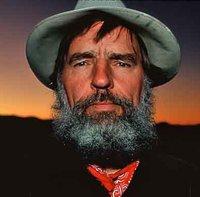
Edward Abbey
Edward Abbey

Edward Abbey was an American author known for his naturalist works and advocacy for environmental protection. His writings often take the desolate wilderness of the American Southwest as a backdrop, profoundly revealing the relationship between humans and nature. Abbey's writing style is unique, filled with humor and satire, and has had a profound impact on later generations. more

You May Also Like

“I moved in distance and as the fight unfolded, I landed a big, destructive, hard-hitting right hand (The Muckspreader) smack on the button and he collapsed in a (muck) heap on the deck, out for the count. His mates looked at me and never said a word. The big fella was asleep and wasn’t moving… I had flattened him.”

“I’d only gone and whacked his front teeth out and they’d stuck in my hand, I still have the scar to this very day. A few weeks later, I got banged up for it; he never went to the police until two weeks later. Somebody had put him wise about getting compensation from the Criminal Injuries Board. Anyway, the CPS (Crown Prosecution Service) kicked it in to touch as a ‘no go’ case.”

“We were called to a pub that had our doormen on, we were told there was fighting. It was he, Big George, but he’d already left. We went in and the bouncers were smashed to bits, shirts ripped off, teeth knocked out, claret and glass everywhere. Single-handedly, George had demolished them, as if they were made out of cardboard.”

“The idea of being forgotten is terrifying. I fear not just that I, personally, will be forgotten but that we are all doomed to being forgotten; that the sum of life is ultimately nothing; that we experience joy and disappointment and aches and delights and loss, make our little mark on the world, and then we vanish, and the mark is erased, and it is as if we never existed. If you gaze into that bleakness even for a moment, the sum of life becomes null and void, because if nothing lasts nothing matters. Everything we experience unfolds without a pattern, and life is just a baffling occurrence, a scattering of notes with no melody. But if something you learn or observe or imagine can be set down and saved, and if you can see your life reflected in previous lives, and can imagine it reflected in subsequent ones, you can begin to discover order and harmony. You know that you are a part of a larger story that has shape and purpose—a tangible, familiar past and a constantly refreshed future. We are all whispering in a tin can on a string, but we are heard, so we whisper the message into the next tin can and the next string. Writing a book is an act of sheer defiance. It is a declaration that you believe in the persistence of memory.”