Quotessence
Home / Quotes / Quote by Edgar Allan Poe

Quote by Edgar Allan Poe

“From childhood's hour I have not been As others were - I have not seen As others saw - I could not bring My passions from a common spring -”
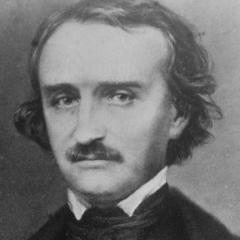
Quote by Edgar Allan Poe

Book:Alone

Work

Alone

This book delves into the emotional journey of a character facing isolation and self-reflection. more

Author

Edgar Allan Poe
Edgar Allan Poe

American author, poet, editor, and literary critic. Known for his short stories and poetry, particularly his works of horror and mystery. His most famous works include 'The Black Cat', 'The Raven', and 'Annabel Lee'. more

You May Also Like

“To be a jazz freedom fighter is to attempt to galvanize and energize world-weary people into forms of organization with accountable leadership that promote critical exchange and broad reflection. The interplay of individuality and unity is not one of uniformity and unanimity imposed from above but rather of conflict among diverse groupings that reach a dynamic consensus subject to questioning and criticism. As with a soloist in a jazz quartet, quintet or band, individuality is promoted in order to sustain and increase the creative tension with the group--a tension that yields higher levels of performance to achieve the aim of the collective project. This kind of critical and democratic sensibility flies in the face of any policing of borders and boundaries of "blackness", "maleness", "femaleness", or "whiteness".”

“Creativity is paradoxical. To create, a person must have knowledge but forget the knowledge, must see unexpected connections in things but not have a mental disorder, must work hard but spend time doing nothing as information incubates, must create many ideas yet most of them are useless, must look at the same thing as everyone else, yet see something different, must desire success but embrace failure, must be persistent but not stubborn, and must listen to experts but know how to disregard them." [Twelve Things You Were Not Taught in School About Creative Thinking (The Creativity Post, December 6, 2011)]”

“Humanity is not an aggregate of individuals, a community of thinkers, each of whom is guaranteed from the outset to be able to reach agreement with the others because all participate in the same thinking essence. Nor, of course, is it a single Being in which the multiplicity of individuals are dissolved and into which these individuals are destined to be reabsorbed. As a matter of principle, humanity is precarious: each person can only believe what he recognizes to be true internally and, at the same time, nobody thinks or makes up his mind without already being caught up in certain relationships with others, which leads him to opt for a particular set of opinions. Everyone is alone and yet nobody can do without other people, not just because they are useful (which is not in dispute here) but also when it comes to happiness.”

“The solitary speaks."One receives as a reward for much ennui , ill-humour and boredom, such as a solitude without friends, books, duties or passions must entail, one harvests those quarters of an hour of the deepest immersion in oneself and nature. He who completely entrenches himself against boredom also entrenches himself against himself: he will never get to drink the most potent refreshing draught from the deepest well of his own being.”

“Our culture promotes individuality, while the Amish are deeply entrenched in community. To us, if someone stands out, it's no big deal because diversity is respected and expected. To the Amish, there's no room for deviation from the norm. It's important to fit in, because that similarity of identity is what defines the society. If you don't fit in, the consequences are psychological tragic, you stand alone when all you've ever known is being part of the group.”