Quotessence
Home / Quotes / Quote by Richard Dawkins

Quote by Richard Dawkins

“[W]e may now be on the threshold of a new kind of genetic takeover. DNA replicators built 'survival machines' for themselves — the bodies of living organisms including ourselves. As part of their equipment, bodies evolved onboard computers — brains. Brains evolved the capacity to communicate with other brains by means of language and cultural traditions. But the new milieu of cultural tradition opens up new possibilities for self-replicating entities. The new replicators are not DNA and they are not 158 The Blind Watchmaker clay crystals. They are patterns of information that can thrive only in brains or the artificially manufactured products of brains — books, computers, and so on. But, given that brains, books and computers exist, these new replicators, which I called memes to distinguish them from genes, can propagate themselves from brain to brain, from brain to book, from book to brain, from brain to computer, from computer to computer.”

Quote by Richard Dawkins

Work

The Blind Watchmaker: Why the Evidence of Evolution Reveals a Universe without Design

Presenting a detailed examination of the mechanisms of evolution, the book argues that natural selection is the primary driver of biological diversity and complexity, and challenges the notion of a divine creator in the process. more

Author
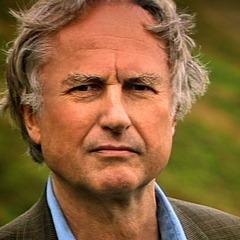
Richard Dawkins
Richard Dawkins

Richard Dawkins is a British ethologist, writer, and thinker, known for his contributions to evolutionary theory, particularly in the field of modern synthesis. He is widely recognized for his best-selling book 'The Selfish Gene', which explains the central role of genes in biological evolution. Dawkins has made significant impacts in the field of science communication and has sparked widespread discussions about human behavior and morality. more

You May Also Like

“The ultimate cause of much historical, social and cultural change is the gradual accumulation of human knowledge of the environment. Human beings use the materials in their environment to meet their needs and increased human knowledge of the environment enables human needs to be met in a more efficient manner. The human environment has a particular structure so that human knowledge of the environment is acquired in a particular order. The simplest knowledge is acquired first and more complex knowledge is acquired later. The order of discovery determines the course of human social and cultural history as knowledge of new and more efficient means of meeting human needs, results in new technology, which results in the development of new social and ideological systems. This means human social and cultural history, has to follow a particular course, a course that is determined by the structure of the human environment.”

“The claim that I defend is that human culture started out profoundly Darwinian, with uncomprehending competences yielding various valuable structures in roughly the way termites build their castles, and then gradually de-Darwinized, becoming ever more efficient in its ways of searching Design Space. In short, as human culture evolved, it fed on the fruits of its own evolution, increasing its design powers by utilizing information in ever more powerful ways.”

“Quantity isnt to be equated with quality, but success in propagation is, in the end, as necessary for memes (however excellent) as it is for organisms. Most organisms leave no issue, and most published books have readerships in the dozens, not thousands, before going out of print for good. Even the greatest works of genius must still pass the test of differential replication.”

“The manifest image that has been cobbled together by genetic evolutionary processes over billions of years, and by cultural evolutionary processes over thousands of years, is an extremely sophisticated system of helpful metaphorical renderings of the underlying reality uncovered in the scientific image. It is a user-illusion that we are so adept at using that we take it to be unvarnished reality, when in fact it has many coats of intervening interpretive varnish on it.”

“all societies have certain needs or desires and they meet these needs by utilizing the resources in their environments. The ability to utilize those resources changes as their knowledge of their environment changes. In particular they develop knowledge of the properties of the resources in their environment and how the resources in their environment can be used to meet human needs and desires. Human knowledge of the resources is dynamic; it changes over time. Greater knowledge of the properties of the resources in the environment allows new ways in which human needs can be meet by exploiting resources in the environment. Our knowledge of our environment grows in a particular order; certain knowledge will inevitably be discovered before other knowledge. The order of our discoveries about nature determines the order of technological change and scientific discoveries in human society. The order of our discoveries of both the properties and structure of nature depend upon the relationship between nature and us. We discover these things in an order from that which is closest to us, to that which is further away, or perhaps in an order from the simplest to the more complex. It is the structure of the universe and our place in it, which determines the order in which our knowledge of nature will grow and this determines what technological and scientific options are available to meet our needs and desires.”

“Here is what a person is: a set of basically compatible long-range interests that have co-opted a sufficient army of short-range interests into their coalition to maintain stable equilibrium. A person is that person just so long as her revealed preferences at the whole-person level don’t significantly cycle. This is why we can model people as (nonstraightforward) economic agents—just as we sometimes can, and should, model countries. Of course, a biological H. sapiens individual goes through changing external circumstances during its biography, so no one coalition of interests will stay in power forever. Becker and other mature anthropocentric neoclassicists have missed this point, whereas a Samuelsonian neoclassicist can accept it without difficulty. At the same time, the social pressures that discipline self-narratives tend to make people more and more like straightforward economic agents for increasing stretches of their biographies. These pressures are not external to their personal utility functions, as Sen supposes. They are what make (whole-) personal utility functions possible in the first place. Society does not struggle to civilize inner Robinson Crusoes, for people don’t biologically have such things. Instead, human society gives rise to something new under the evolutionary sun: creatures that act increasingly like the economic agents familiar among our asocial relatives, who nevertheless turn the trick of achieving the powerful network efficiencies that the asocial cannot.”

“A fair social contract is then taken to be an equilibrium in the game of life that calls for the use of strategies which, if used in the game of morals, would never leave a player with an incentive to exercise his right of appeal to the device of the original position. So a fair social contract is an equilibrium in the game of morals, but it must never be forgotten that it is also an equilibrium in the game of life; otherwise evolution will sweep it away. Indeed, the game of morals is nothing more than a coordination device for selecting one of the equilibria in the game of life.”

“Social and cultural change derived from increasing human knowledge is not random and so can be scientifically understood. We can not predict the future of social and cultural change as we do not know what future discoveries we will make. This is analogous to biological evolution where changes in living species are unpredictable as we do not know what changes will occur in the environment of those species. However biological evolution does make changes in living species rationally understandable, just as an analysis of the order of discovery of the human environment makes social and cultural change rationally understandable.”