Quotessence
Home / Quotes / Quote by John Steinbeck

Quote by John Steinbeck

Work

East of Eden

John Steinbeck's 'East of Eden' is a profound and complex narrative that delves into the lives of the Joad family as they navigate the challenges of their time. The story is rich with symbolism and philosophical musings, offering a rich tapestry of human emotions and societal struggles. more
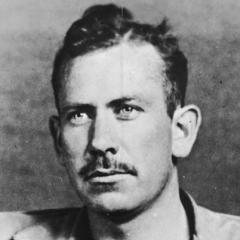
Author

John Steinbeck
John Steinbeck

John Steinbeck was an American author renowned for his profound depiction of American society and the lives of farmers. His works often explore themes of poverty, social injustice, and human nature. Steinbeck was awarded the Nobel Prize in Literature in 1962 for his significant contribution to American literature. more

You May Also Like

“It is the task of the "science of man" to arrive eventually at a correct description of what deserves to be called human nature. What has often been called "human nature" is but one of its many manifestations - and often a pathological one - and the function of such mistaken definition usually has been to defend a particular type of society as being the necessary one.”

“The greatest moral appeal of the doctrine of the Blank Slate comes from a simple mathematical fact: zero equals zero. This allows the Blank Slate to serve as a guarantor of political equality...[I]f we are all blank slates, the reasoning goes, we must all be equal. But if the slate of a newborn is not blank, different babies could have different things inscribed on their slates. Individuals, sexes, classes, and races might differ innately in their talents, abilities, interests, and inclinations. And that, it is thought, could lead to three evils. The first is prejudice: if groups of people are biologically different, it could be rational to discriminate against the members of some of the groups. The second is Social Darwinism: if differences among groups in their station in life...come from their innate constitutions, the differences cannot be blamed on discrimination, and that makes it easy to blame the victim and tolerate inequality. The third is eugenics: if people differ biologically in ways that other people value or dislike, it would invite them to try to improve society by intervening biologically -by encouraging or discouraging people's decisions to have children...or by killing them outright. The Nazis carried out the final solution because they thought Jews and other ethnic groups were biologically inferior. The fear of the terrible consequences that might arise from a discovery of innate differences has thus led many intellectuals to insist that such differences do not exist...”