Quotessence
Home / Quotes / Quote by Tahar Ben Jelloun

Quote by Tahar Ben Jelloun

“Outside, not only over our pit but above all far away from it, there was life. You could not think too much about it, but I liked to imagine it so as not to die of forgetfulness. Imagine, and not remember. Life, the real one, not that dirty rag blowing across the ground, no, life in its exquisite beauty. I mean in its simplicity, its marvelous banality: a child smiling after tears; eyes blinking in too bright light; a woman trying on a dress; a man asleep on the grass. A horse galloping across a plain. A man wearing many-colored wings attempting to fly. A tree bending to shade a woman sitting on a stone. The sun drifts off, and you even see a rainbow. Life: it's being able to raise your arm, rub the back of your neck, stretch for the pure pleasure of it, get up and stroll aimlessly, watch people go by, stop, read a newspaper - or simply stay sitting at your window because you have nothing to do and it's nice to do nothing.”

Quote by Tahar Ben Jelloun

Work

تلك العتمة الباهرة

Browse quotes and source details for this work. more

Author
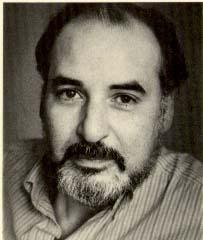
Tahar Ben Jelloun
Tahar Ben Jelloun

Tahar Ben Jelloun is a Moroccan-French writer born on December 1, 1944. His works, which cover literature, history, and social issues, are renowned for their profound insight and rich imagination. more

You May Also Like

“There was something lacking in these ofay places of amusement or else there was something present that one didn’t find in the black-and-tan resorts in Harlem. The joy and abandon here was obviously forced. Patrons went to extremes to show each other they were having a wonderful time. It was all so strained and quite unlike anything to which he had been accustomed. The Negroes, it seemed to him, were much gayer, enjoyed themselves more deeply and yet they were more restrained, actually more refined. Even their dancing was different. They followed the rhythm accurately, effortlessly and with easy grace; these lumbering couples, out of step half the time and working as strenuously as stevedores emptying the bowels of a freighter, were noisy, awkward, inelegant. At their best they were gymnastic where the Negroes were sensuous.”

“I remembered Robyn telling me the story of Shadrach, Meshach, and Abednego, and how they'd survived: when the King chucked them in the furnace and an angel or someone went in with them. The furnace blazed all around them but they didn't burn. And it did calm me. I don't know if it was Robyn or an angel or even God himself was in the boot, but I was starting to suspect that whenever I wanted God, he was there. Only not necessarily in the form I wanted, or doing what I wanted...In the pitch of the black boot I clung to the image of a fiery furnace, and it wasn't the furnace or Hell either.”

“...but most of all he liked to listen to stories of real life. He smiled gleefully as he listened to such stories, putting in words and asking questions, all aiming at bringing out clearly the moral beauty of the action of which he was told. Attachments, friendships, love, as Pierre understood them, Karataev had none, but he loved and lived on affectionate terms with every creature with whom he was thrown in life, and especially so with man- not with any particular man, but with the men that happened to be before his eyes. But his life, as he looked at it, had no meaning as a separate life. It only had meaning as part of a whole, of which he was at all times conscious.”