Quotessence
Home / Quotes / Quote by Simone de Beauvoir

Quote by Simone de Beauvoir

Work

The Second Sex

Written by Simone de Beauvoir, this influential book delves into the complexities of gender identity and the social construction of femininity and masculinity. It examines the ways in which women are marginalized and the implications of this on their personal and societal lives. more
Author

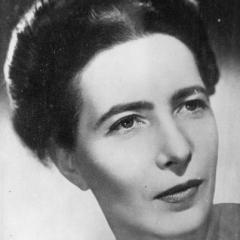
Simone de Beauvoir
Simone de Beauvoir

Simone de Beauvoir was a French writer, philosopher, feminist, and social activist. Known for her profound philosophical thoughts and her advocacy for women's status, she is one of the most influential female thinkers of the 20th century. Her works spanned various genres, including novels, philosophical essays, plays, and memoirs, with her most famous work being 'The Second Sex'. more

You May Also Like

“While limerence has been called love, it is not love. Although the limerent feels a kind of love for LO at the time, from LO’s point of view limerence and love are quite different from each other. It is limerence, not love, that increases when lovers are able to meet only infrequently or when there is anger between them. No wonder those who view limerence from an external vantage are baffled by what seems more a form of insanity than a form of love. Jean-Paul Sartre calls it a project with a “contradictory ideal.” He notes that each of the lovers seek the love of the other without realizing that what they want is to be loved. His conclusion is that the amorous relation is “a system of infinite reflections, a deceiving mirror game which carries within itself its own frustration,” a kind of “dupery.” It should also be clear now that limerent uncertainly as well as projection can be viewed as the consequence of your limerent inclination to hide your own feelings: If you hide your true reactions, then LO, if indeed limerent, can be expected to do the same. When LO appears not to be eager, or even interested, it is not unreasonable to interpret that behavior as evidence itself of limerence; and a kind of “paranoia” becomes an entirely logical consequence of a situation that may indeed be what Simone de Beauvoir has called it: “impossible.” Because one of the invariant characteristics of limerence is extreme emotional dependency on LO’s behavior, the actual course of the limerence must depend on the actions and reactions of both lovers. Uncertainty increases limerence; increased limerence dictates altered action which serves to increase or decrease limerence in the other according to the interpretation given. The interplay is delicate if the relationship hovers near mutuality; a subtle imbalance, constantly shifting, appears to maintain it. Each knows who “loves more.” If limerence were measurable by an instrument that enabled its intensity to be read by the points on a dial, one could imagine that, if lovers sat together reading each other’s degree of reciprocation, the dials would rarely if ever set themselves at the same point on the scales. For instance, if you found yourself more limerent than your partner, then your limerence might decline through reduced hope, or if your partner’s were higher, it might decline through reduced uncertainty. Perhaps such true awareness would provide a means of controlling the reaction.”

“In an article titled "The Ex-Communists," she analyzed how these McCarthy loyalists had simply switched allegiances. Instead of demanding communism as they had earlier, they now called for unconditional loyalty and cooperation in denouncing others for the sake of freedom and democracy. They still had a cause, just a different one from before. The new cause, the right cause, she continued, had a totalitarian catch to it. By turning democracy "into a cause," something that would arrive in the future and to which the present must be devoted, the present became unfree. The idea of futurity destroyed the present moment. How could one escape this destruction of the present by fear of the future....?”

“Of course you don't get it," he said. "You and Yaya, you've always felt trapped here. But I don't want to graduate." He rolled a banana against the table with his palm. "I've spent my whole life reading beautiful books and watching beautiful movies, dreaming that there was some real place out there where I would fit in and be beautiful, too. And now I'm here. And I don't to leave. I don't want to get an ugly job in an ugly office full of shit like staplers and fax machines. I don't want to write memos. I don't want us all to move far away from each other and grow up and forget to call. I don't to get fat. I don't want to be tired. I don't know. I just...sometimes I can't imagine anything good happening to me. After Catherine.”