Quotessence
Home / Quotes / Quote by Ta-Nehisi Coates

Quote by Ta-Nehisi Coates

Work

Between the World and Me

In this powerful and moving work, the author delves into the intersection of race, history, and personal experience, offering a raw and honest perspective on the African American experience. more

Author
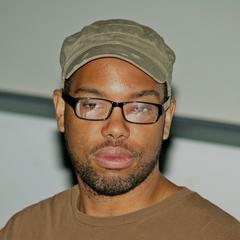
Ta-Nehisi Coates
Ta-Nehisi Coates

Ta-Nehisi Coates is an American writer known for his insightful social commentary and literary works. His writings often focus on themes of race, history, and social justice, with his most famous work being 'Between the World and Me', which won the Pulitzer Prize in 2015. more

You May Also Like

“Do you ever feel that same need? Your life is so very different from my own. The grandness of the world, the real world, the whole world, is a known thing for you. And you have no need of dispatches because you have seen so much of the American galaxy and its inhabitants—their homes, their hobbies—up close. I don’t know what it means to grow up with a black president, social networks, omnipresent media, and black women everywhere in their natural hair. What I know is that when they loosed the killer of Michael Brown, you said, “I’ve got to go.” And that cut me because, for all our differing worlds, at your age my feeling was exactly the same. And I recall that even then I had not yet begun to imagine the perils that tangle us. You still believe the injustice was Michael Brown. You have not yet grappled with your own myths and narratives and discovered the plunder everywhere around us. Before I could discover, before I could escape, I had to survive, and this could only mean a clash with the streets, by which I mean not just physical blocks, nor simply the people packed into them, but the array of lethal puzzles and strange perils that seem to rise up from the asphalt itself. The streets transform every ordinary day into a series of trick questions, and every incorrect answer risks a beat-down, a shooting, or a pregnancy. No one survives unscathed. And yet the heat that springs from the constant danger, from a lifestyle of near-death experience, is thrilling. This is what the rappers mean when they pronounce themselves addicted to “the streets” or in love with “the game.” I imagine they feel something akin to parachutists, rock climbers, BASE jumpers, and others who choose to live on the edge. Of course we chose nothing. And I have never believed the brothers who claim to “run,” much less “own,” the city. We did not design the streets. We do not fund them. We do not preserve them. But I was there, nevertheless, charged like all the others with the protection of my body. The crews, the young men who’d transmuted their fear into rage, were the greatest danger. The crews walked the blocks of their neighborhood, loud and rude, because it was only through their loud rudeness that they might feel any sense of security and power. They would break your jaw, stomp your face, and shoot you down to feel that power, to revel in the might of their own bodies.”

“We will always be black, you and I, even if it means different things in different places. France is built on its own dream, on its collection of bodies, and recall that your very name is drawn from a man who opposed France and its national project of theft by colonization. It is true that our color was not our distinguishing feature there, so much as the Americanness represented in our poor handle on French. And it is true that there is something particular about how the Americans who think they are white regard us—something sexual and obscene. We were not enslaved in France. We are not their particular “problem,” nor their national guilt. We are not their niggers. If there is any comfort in this, it is not the kind that I would encourage you to indulge. Remember your name. Remember that you and I are brothers, are the children of trans-Atlantic rape. Remember the broader consciousness that comes with that. Remember that this consciousness can never ultimately be racial; it must be cosmic. Remember the Roma you saw begging with their children in the street, and the venom with which they were addressed. Remember the Algerian cab driver, speaking openly of his hatred of Paris, then looking at your mother and me and insisting that we were all united under Africa. Remember the rumbling we all felt under the beauty of Paris, as though the city had been built in abeyance of Pompeii. Remember the feeling that the great public gardens, the long lunches, might all be undone by a physics, cousin to our rules and the reckoning of our own country, that we do not fully comprehend.”