Quotessence
Home / Quotes / Quote by Rachel Carson

Quote by Rachel Carson

“It is more important to pave the way for the child to want to know than to put him on a diet of facts he is not ready to assimilate.” — Rachel Carson, A sense of wonder”

Quote by Rachel Carson

Author
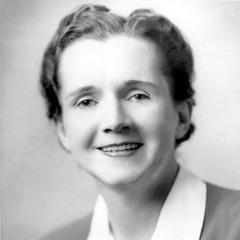
Rachel Carson
Rachel Carson

Rachel Carson, an American marine biologist, was born on May 27, 1907, and passed away on April 14, 1964. She is renowned for her in-depth research on marine ecosystems and her advocacy for environmental issues. Carson's book 'Silent Spring' revealed the destructive impact of pesticides on the environment, which had a profound impact on the environmental movement. more

You May Also Like

“When man chooses to develop his innate power of communication with nature and therefore hear the voice, all will be right with the world – we will be as one. What you have been able to do with your Modoc is what man has been seeking for a long time. To communicate with nature through animals.”

“He thought of all that the newspapers were printing about him. Each man attributed to him his own hopes, his own motives and rancors, and his own secret misanthropy: it was in vain that he stated his own aims clearly; there was nothing he could do about it. And yet the truth was clear; it could hardly be clearer. He loved all those free roots that gave their beauty to the earth and to man’s life on it. He loved nature, and he had always done his best to defend it.”

“My interest has always been in the place where sex and race are both obscenely conspicuous and yet consciously suppressed, largely because of the liminal place that the Asian man occupies in the midst of it: an “honorary white” person who will always be denied the full perquisites of whiteness; an entitled man who will never quite be regarded or treated as a man; a nominal minority whose claim to be a “person of color” deserving of the special regard reserved for victims is taken seriously by no one. In an age characterised by the politics of resentment, the Asian man knows something of the resentment of the embattled white man besieged on all sides by grievances and demands for reparation, and something of the resentments of the rising social justice warrior, who feels with every fibre of their being that all that stands in the way of the attainment of their thwarted ambitions is nothing so much as a white man. Tasting of the frustrations of both, he is denied the entitlements of either.”

“[…] as the bearer of an Asian face in America, you paid some incremental penalty, never absolute, but always omnipresent, that meant that you were by default unlovable and unloved; that you were presumptively a nobody, a mute and servile figure, distinguishable above all by your total incapacity to threaten anyone; that you were many laudable things that the world might respect and reward, but that you were fundamentally powerless to affect anyone in a way that would make you either loved or feared. What was the epistemological status of such an extravagant assertion? Could it possibly be true? Could it survive empirical scrutiny? It was a dogmatic statement at once unprovable and unfalsifiable. It was a paranoid statement about the way others regarded you that couldn’t possibly be true in any literal sense. It had no real truth value, except that under certain conditions, one felt it with every fibre of one’s being to be true.”

“You see,” he said turning to Mr Norton, “he has eyes and ears and a good distended African nose, but he fails to understand the simple facts of life. Understand. Understand? It’s worse than that. He registers with his senses but short-circuits his brain. Nothing has meaning. He takes it in but he doesn’t digest it. Already he is—well, bless my soul! Behold! a walking zombie! Already he’s learned to repress not only his emotions but his humanity. He’s invisible, a walking personification of the Negative, the most perfect achievement of your dreams, sir! The mechanical man!”

“I contend that the cry of 'Black Power' is, at bottom, a reaction to the reluctance of white power to make the kind of changes necessary to make justice a reality for the Negro. I think that we've got to see that a riot is the language of the unheard. And, what is it that America has failed to hear? It has failed to hear that the economic plight of the Negro poor has worsened over the last few years." — Martin Luther King, Jr., 60 Minutes Interview, 1966”