Quotessence
Home / Quotes / Quote by Louise Fitzhugh

Quote by Louise Fitzhugh

Work

Harriet the Spy

This book is a classic in children's literature, chronicling the mischievous and imaginative life of Harriet M. Welsch, a young girl who embarks on a secret life as a spy. Through her observations and diary entries, readers are introduced to the complexities of friendship, family, and the challenges of growing up. more
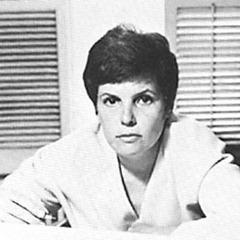
Author

Louise Fitzhugh
Louise Fitzhugh

Louise Fitzhugh (October 5, 1928 – November 19, 1974) was an American author and illustrator, best known for her classic children's novel Harriet the Spy. Born in Memphis, Tennessee, she grew up in New York City and studied art at Bard College and Cooper Union. Fitzhugh's works are noted for their psychological depth and rebellious spirit, challenging traditional gender and family norms in children's literature. Harriet the Spy, published in 1964, remains a beloved and influential book, adapted into films and TV series. She died of a brain aneurysm at age 46, but her legacy endures in the world of children's literature. more

You May Also Like

“It still feels surreal to say this — but The Castle of High Winds will be out in just a few weeks. This story started as a whisper in my mind: a girl, a castle, and a family haunted by secrets and the wind itself. It became something bigger than I expected — a mix of mystery, magic, and emotion that I can’t wait to finally share. To everyone who’s supported me, encouraged me, or simply asked about the book — thank you. Your kindness has meant more than you know. I hope when you read Emily’s journey, you’ll feel a little of the wonder and courage that went into creating it. Release date: Oct 31, 2025 Available on Amazon #TheCastleOfHighWinds #YAfiction #FantasyBooks #IndieAuthor #NewBookRelease”

“I had always believed that the very best food contains something elementally repugnant. That its innate grotesquerie is what makes it so perversely alluring. My own favorite foods tended toward a certain sludgy, muddy texture. And from the most expensive and genteel through to the indulgently crass, the appeal of slop abides: caviar, escargots, foie gras or hamburgers, kebabs, macaroni and cheese. Even vegetable soup forms a membrane. Apples begin rotting from the very first bite. No matter which end of the spectrum, there lies fundamentally and yet delectably disgusting, some squirmy, sinewy, oozing, greasy, sticky, glutinous, mushy, fatty, chewy, viscous thing that compels. The line between pleasure and revulsion can seem so very thin, if it even exists at all.”

“There was one story that anger certainly lit the fuse of. In the 1960's, in my home town of Jackson, the civil rights leader Medgar Evers was murdered on night in darkness and I wrote a story that same night about the murderer (identity unknown) called "Where Is The Voice Coming From?" But all that absorbed me, though it started as outrage, was the necessity I felt for entering into the mind and inside the skin of a character who could hardly have been more alien or repugnant to me. Trying for my utmost, I wrote in the first person. I was wholly vaunting the prerogative of the short-story writer. It is always vaunting, of course, to imagine yourself inside another person, but it is what a story writer does in every piece of work; it is his first step, and his last too, I suppose. I'm not sure this story was brought off; and I don't believe that my anger showed me anything about human character that my sympathy and rapport never had.”