“When there is no way of knowing exactly how long our skeins will run--and when we imagine ourselves to have much more time than we do--our every impulse is to fight, to die with chemo in our veins or a tube in our throats or fresh sutures in our flesh. The fact that we may be shortening or worsening the time we have left hardly seems to register. We imagine that we can wait until the doctors tell us that there is nothing more they can do. But rarely is there nothing more that doctors can do. They can give toxic drugs of unknown efficacy, operate to try to remove part of the tumor, put in a feeding tube if a person can't eat: there's always something. We want these choices. But that doesn't mean we are eager to make the choices ourselves. Instead, most often, we make no choice at all. We fall back on the default, and the default is: Do Something. Fix Something. Is there any way out of this?”
Quote by Atul Gawande
Work
In this insightful book, the author delves into the complexities of aging and the end of life, examining the intersection of medicine, ethics, and personal values. The narrative explores the challenges faced by patients, families, and healthcare providers as they navigate the final stages of life, emphasizing the need for meaningful conversations and the pursuit of a good quality of life. more
Author
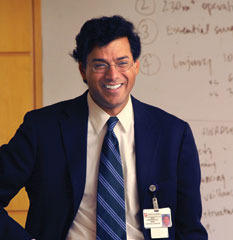
Atul Gawande is a renowned American surgeon and writer. Born on November 5, 1965, in Mumbai, India, he immigrated to the United States. Gawande is known for his expertise in surgery and his profound insights into the healthcare system. His writings cover a range of topics from surgical techniques to medical ethics, and have been well-received by readers. more
You May Also Like
“no matter how prepared you are you're never ready”
“You are my emergency contact. This is the emergency! My life is burning down!”