“The question why there is evil in existence is the same as why there is imperfection, or in other words, why there is creation at all. We must take it for granted that it could not be otherwise, that creation must be imperfect, must be gradual, and that it is futile to ask the question, ‘Why are we?’ But this is the real question we ought to ask: Is this imperfection the final truth? Is evil absolute and ultimate? The river has its boundaries, its bank, but is a river all banks or are the banks the final facts about the river? Do not these obstructions themselves give its water an onward motion? The towing rope binds a boat, but is bondage its meaning? Does it not at the same time draw the boat forward? The current of the world has its boundaries, otherwise it could have no existence, but its purpose is not shown in the boundaries which restrain it, but in its movement which is towards perfection. The wonder is not that there should be obstacles and sufferings in this world, but that there should be law and order, beauty and joy, goodness and love. The idea of God that man has in his being is the wonder of all wonders. He has felt in the depths of his life that what appears as imperfect is the manifestation of the perfect. Just as a man who has an ear for music realises the perfection of a song, while in fact he is only listening to a succession of notes. Man has found out the great paradox that what is limited is not imprisoned within its limits; it is ever moving, and therewith shedding its finitude every moment. In fact, imperfection is not a negation of perfectness. Finitude is not contradictory to the infinity. They are but completeness manifested in parts; infinity revealed within bounds.”
Quote by Rabindranath Tagore
Book:Sadhana
Work
Author
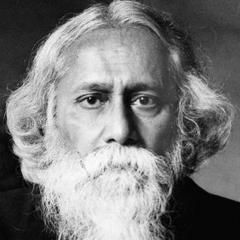
Rabindranath Tagore
Rabindranath Tagore, a renowned Indian poet, writer, philosopher, and social activist, was born on May 7, 1861, in Calcutta, and passed away on August 7, 1941. Tagore's works blend the influences of traditional Indian literature and Western literature, and his poetry, novels, plays, and essays have won the hearts of readers worldwide. He was the first Asian writer to win the Nobel Prize in Literature, and his works have had a profound impact on world literature. more
You May Also Like
Source: Magenta
Source: Magenta
“Fenris was a good man and maybe the weakness of being good was that evil didn't occur to you.”
Source: Nettle & Bone
Source: Waiting with God: 31 Days to Finding Answers for Unanswered Prayers
Source: A World of Curiosities
Source: The Secret History
Source: The Letters of J.R.R. Tolkien
Source: The Letters of J.R.R. Tolkien
Source: Soulkeeper
“When it's not possible to be good, leave. Better is the absence of good than the presence of evil.”