Quotessence
Home / Quotes / Quote by Orson Scott Card

Quote by Orson Scott Card

Work

Lost and Found

Browse quotes and source details for this work. more
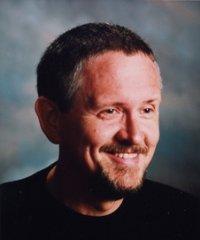
Author

Orson Scott Card
Orson Scott Card

Orson Scott Card, born on August 24, 1951, is a renowned science fiction novelist from the United States. His works are known for their profound philosophical insights and rich imagination, with 'Ender's Game' series being particularly famous and influential in the science fiction genre. more

You May Also Like

“Because of my secret sense, I have always preferred the stories in the pages of books to those on the screen, but no matter the medium there seemed to be an overriding message: I was lucky to have a mother. Rapunzel was taken away from her mother at birth. Her mother didn't even get to name her and probably wouldn't have chosen the name Rapunzel. Snow White and Gretel had stepmothers who plotted their violent deaths while Cinderella's own stepmother contemplated a slow death for her via the drudgery of housework and the crippling lack of a social life. Girls without their mothers were clearly at risk. Though in most of these stories, the girls eventually did find safety in marriage and lived happily ever after without bickering or marital strife.”

“To a parent, your child wasn't just a person: your child was a *place*, a kind of Narnia, a vast eternal place where the present you were living and the past you remembered and the future you longed for all existed at once. You could see it every time you looked at her: layered in her face was the baby she'd been and the child she'd become and the adult she would grow up to be, and you saw them all simultaneously, like a 3-D image.”

“There's a psychological mechanism, I've come to believe, that prevents most of us from imagining the moment of our own death. For if it were possible to imagine fully that instant of passing from consciousness to nonexistence, with all the attendant fear and humiliation of absolute helplessness, it would be very hard to live. It would be unbearably obvious that death is inscribed in everything that constitutes life, that any moment of your existence may be only a breath away from being the last. We would be continuously devastated by the magnitude of that inescapable fact. Still, as we mature into our mortality, we begin to gingerly dip our horror-tingling toes into the void, hoping that our mind will somehow ease itself into dying, that God or some other soothing opiate will remain available as we venture into the darkness of non-being.”