Quotessence
Home / Quotes / Quote by John Sedgwick

Quote by John Sedgwick

Author

John Sedgwick
John Sedgwick

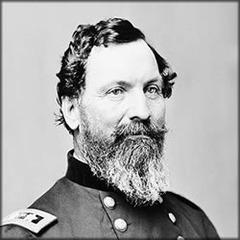
John Sedgwick was an individual of an unknown profession active in the 19th century. He was born on September 13, 1813, and died on May 9, 1864. Detailed information about his life and achievements is limited. more

You May Also Like

“There’s nothing to be scared of, right Akhol?” He said nothing as he stepped toward the rushing water that rolled around a big rock and was swallowed whole by impenetrable darkness. “Right?” Andrew repeated, his voice swallowed by the sound of rushing water. Akhol didn’t respond again. He tapped a foot above the water before he stepped in and disappeared beneath the surface in one fluid motion.”

“of course they don't see the alienation. they don't see the decadence and degeneracy. they do not see how the meaninglessness of European life leads to not only depression, but drug addiction. Drug addiction of both illegal and also legal drugs... antidepressants and such medications. they don't see the alienation of the people within generations and from each other. they don't see how it is almost impossible now for young men and young women to come together and form strong, stable romantic and emotional bonds that will lead to flourishing families. They don't see that. They don't see it at all.”

“Money is a tool, not an outcome. It brings experience, stability, and specific lifestyles. But when you use it toward your suck, it will all be useless.”

“I don't know how it got to this, but I'm in a war. There's no chance for diplomacy. They want me dead and I don't think I can run from this. Not after what they've done to me. So if this is a war, then I'm going to take the fight to them. I'll raid their lair and I'll kill as many as I can. There seem to be endless numbers of them, but they've got to have a limit. Tonight we'll find out if there are more of them than there is fight in me.”

“Fran had from an unsuitably early age been attracted by the heroic death, the famous last words, the tragic farewell. Her parents had on their shelves a copy of Brewer's 'Dictionary of Phase and fable', a book which, as a teenager, she would morbidly browse for hours. One of her favourite sections was 'Dying Sayings', with its fine mix of the pious, the complacent, the apocryphal, the bathetic and the defiant. Artists had fared well: Beethoven was alleged to have said 'I shall hear in heaven'; the erotic painter Etty had declared 'Wonderful! Wonderful this death!'; and Keats had died bravely, generously comforting his poor friend Severn. Those about to be executed had clearly had time to prepare a fine last thought, and of these she favoured the romantic Walter Raleigh's, 'It matters little how the head lies, so the heart be right'. Harriet Martineau, who had suffered so much as a child from religion, as Fran had later discovered, had stoically remarked, 'I see no reason why the existence of Harriet Martineau should be perpetuated', an admirably composed sentiment which had caught the child Fran's attention long before she knew who Harriet Martineau was. But most of all she had liked the parting of Siward the Dane who had commended his men: 'Lift me up that I may die standing, not lying down like a cow'.”